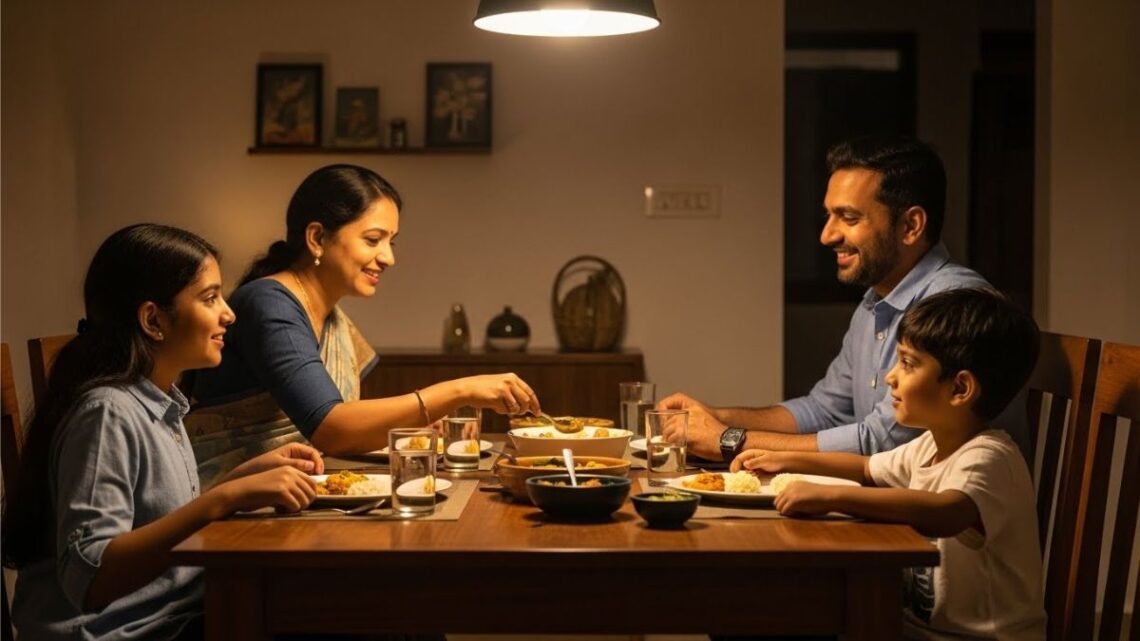
How to Create a Happy Family Dinner Routine
Disclaimer: This article may contain affiliate links. If you purchase through these links, I may earn a small commission as an Amazon Associate—at no additional cost to you.
In today’s fast-paced Indian households, families often eat at different times due to work, school, and screen habits. However, regular family dinners act as a daily emotional anchor.
Studies across cultures consistently show that families who eat together experience:
- Better communication and emotional bonding
- Healthier eating habits
- Lower stress levels in children and adults
For Indian homemakers, dinner is not just a meal—it’s the one time when everyone can pause, reconnect, and reset emotionally after a long day.
A well-planned dinner routine supports mental wellness, mindful living, and a balanced home environment, which aligns strongly with minimal and intentional lifestyles.
Fix a Consistent (Not Perfect) Dinner Time
A happy routine starts with predictability, not strict rules. Choose a time that works for most family members on most days.
How to make it work realistically:
- Fix a time window (e.g., 8:00–8:30 PM) instead of a strict clock time
- Adjust slightly on weekends or festival days
- Inform everyone in advance so expectations are clear
Consistency builds emotional security, especially for children. When family members know dinner is a shared ritual, they naturally begin to prioritize it.
From a home management perspective, a fixed routine also helps in better grocery planning, reduced food waste, and calmer evenings.
Keep the Dinner Table Screen-Free
Phones, TV, and tablets quietly steal attention and emotional presence. Even one distracted person can break the connection at the table.
Create simple screen rules:
- No TV during dinner
- Phones kept on silent or outside the dining area
- Emergency calls only
Screen-free dinners encourage mindful eating, better digestion, and deeper conversations. For adults, it becomes a mental detox after a long digital day.
Homes that follow this habit often notice improved focus, reduced arguments, and stronger family bonds, making the dining space emotionally safe and calming.
Involve Everyone in Small Dinner Roles
A happy dinner is not just served—it’s co-created. Involving family members builds responsibility and emotional ownership.
Simple roles anyone can do:
- Setting plates and glasses
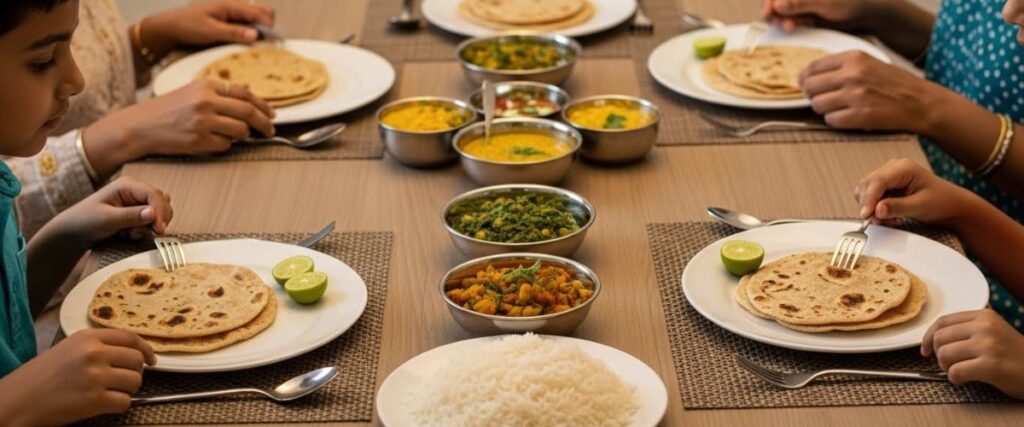
- Serving salad or rotis
- Clearing the table after meals
Children who participate feel valued, and adults feel less burdened. This also teaches life skills naturally, without lectures.
From a homemaker’s perspective, shared responsibility reduces burnout and makes daily routines more sustainable in the long run.

Keep Meals Simple, Familiar, and Nourishing
Family dinners don’t need elaborate dishes every day. Simple, home-style food creates comfort and consistency.
Focus on:
- Familiar Indian meals (dal-chawal, sabzi-roti, curd rice)
- Balanced portions, not perfection
- Occasional treats without guilt
Simple meals save time, energy, and money—key principles of mindful and minimal living. They also reduce daily decision fatigue for homemakers.
A calm cook creates a calm home. When dinner preparation is stress-free, the dining experience automatically becomes happier.
Encourage Light, Positive Table Conversations
Dinner conversations shape family culture. Avoid turning the table into a complaint or lecture zone.
Healthy conversation ideas:
- “What was the best part of your day?”
- Sharing one small win or learning
- Planning something enjoyable together
These conversations improve emotional intelligence and trust over time. Even quiet families benefit from gentle, consistent interaction.
Regular positive conversations strengthen relationships, making the home emotionally resilient during stressful phases of life.
Respect Emotional Energy, Not Just Rules
Some days are tiring. A happy dinner routine allows flexibility without guilt.
Practice emotional awareness:
- Keep conversations lighter on stressful days
- Allow silence when needed
- Focus on presence, not performance
This approach aligns with mindful living—honoring real emotions while maintaining meaningful rituals.
Homes that prioritize emotional balance over rigid discipline feel safer, calmer, and more connected.
FAQs
Ideally, 4–5 times a week is enough to build strong emotional bonds. Even fewer days can be effective if the time is consistent and distraction-free.
Create a flexible time window or plan at least a few fixed days per week. Quality matters more than daily perfection.
Involve children in small tasks, keep conversations positive, and avoid pressure around food. When kids feel included, they naturally engage.
Yes. Shared meals reduce stress, improve communication, and provide emotional stability for both adults and children over time.


You May Also Like