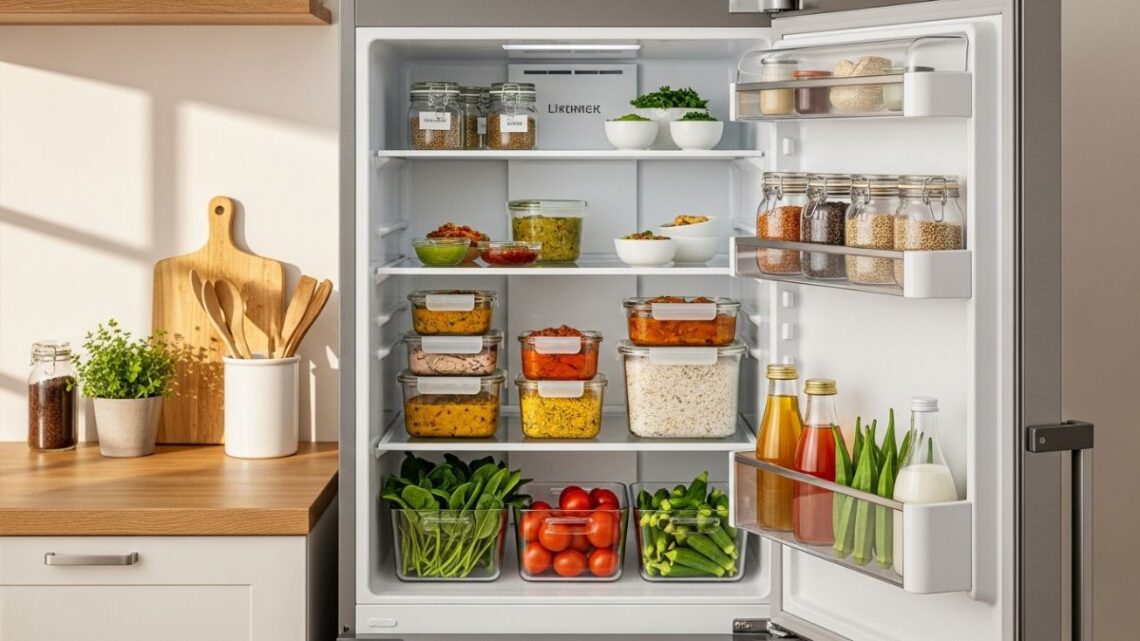
How to Organise a Fridge: Complete Guide for Indian Homes
Disclaimer: This article may contain affiliate links. If you purchase through these links, I may earn a small commission as an Amazon Associate—at no additional cost to you.
A well-organised refrigerator does more than just look neat—it directly impacts your family’s health, monthly grocery budget, and daily cooking efficiency.
Indian households typically store diverse ingredients from fresh vegetables and dairy to leftover curries, chutneys, and pickles. Without proper organisation, you’re likely wasting up to 40% of fresh produce due to spoilage, according to food safety studies. Poor fridge management also leads to cross-contamination between raw and cooked foods, increasing the risk of foodborne illnesses.
When you organise your fridge strategically, you can see everything at a glance, which means less time spent searching for ingredients and fewer forgotten items going bad at the back. This translates to significant savings—families report reducing food waste by 30-50% simply by implementing basic fridge organisation systems.
Understanding Your Fridge Temperature Zones
Not all shelves in your refrigerator maintain the same temperature. Understanding these zones helps you place foods where they’ll stay freshest longest.
Top Shelves (4-5°C)
The upper shelves experience the most consistent temperature and are ideal for foods that don’t require cooking:
- Leftover dal, sabzi, and curries in airtight containers
- Yogurt, paneer, and other dairy products
- Ready-to-eat items like buttermilk and curd rice
- Desserts and sweets
These shelves are perfect for items you’ll consume within 2-3 days. Store leftovers in transparent glass containers so you can quickly identify what needs to be eaten first.
Middle Shelves (3-4°C)
This zone maintains a slightly cooler temperature and works well for:
- Eggs (contrary to popular belief, eggs last longer in the fridge than on the door)
- Cheese blocks and sliced cheese
- Opened packaged foods like milk tetra packs
- Prepared ingredients for tomorrow’s meals
The middle section is your “prep zone”—keep ingredients here that you plan to use within the next day or two.
Bottom Shelf (1-2°C)
This is the coldest part of your fridge (except the freezer) because cold air sinks. This shelf must be reserved for:
- Raw chicken, mutton, and fish in sealed containers
- Marinating meats
- Thawing frozen items
Critical Safety Rule: Never store raw meat above cooked foods or vegetables. Any drips from raw meat can contaminate everything below, creating serious health risks.
Crisper Drawers (High Humidity)
These drawers are designed to maintain moisture, keeping produce fresh:
- Leafy vegetables like spinach, coriander, and methi
- Vegetables like beans, capsicum, and bottle gourd
- Fruits that need refrigeration (grapes, berries, pomegranate)
Wrap vegetables in newspaper or paper towels before placing them in drawers to absorb excess moisture and extend freshness by 3-5 days.
Door Compartments (5-7°C)
The door is the warmest part of the fridge due to constant opening and closing. Store only:
- Condiments (tomato ketchup, mayonnaise, sauces)
- Pickles and chutneys
- Butter (in covered compartments)
- Juices and beverages
Never store milk, eggs, or perishable items in the door—temperature fluctuations will spoil them faster.
Step-by-Step Fridge Organisation Process
Step 1: Empty and Clean Completely
Remove everything from your fridge and check expiration dates. Discard items that are:
- Past their expiry date
- Showing signs of mold or unusual odor
- Leftovers older than 3-4 days
Clean all shelves and drawers with a solution of 1 tablespoon baking soda mixed in 1 liter warm water. This removes odors without harsh chemicals. Dry completely before restocking.
Step 2: Categorize Your Food Items
Group similar items together:
- Dairy zone: Milk, curd, paneer, cheese, butter
- Leftover zone: Cooked foods in containers
- Vegetable zone: All produce in crispers
- Beverage zone: Water bottles, juices, buttermilk
- Raw protein zone: Meat and fish on the bottom shelf
This categorization makes meal prep faster and ensures you use items before they spoil.
Step 3: Use Proper Storage Containers
Invest in these essential containers for Indian fridge organization:
- Airtight glass containers (500ml to 1.5L): For dal, sabzi, curries
- Square/rectangular containers: Save 30% more space than round ones
- Stackable containers: Maximize vertical space
- Transparent containers: See contents without opening
- Separate containers for strong-smelling items: Keep fish fry, pickles, and garlic paste isolated
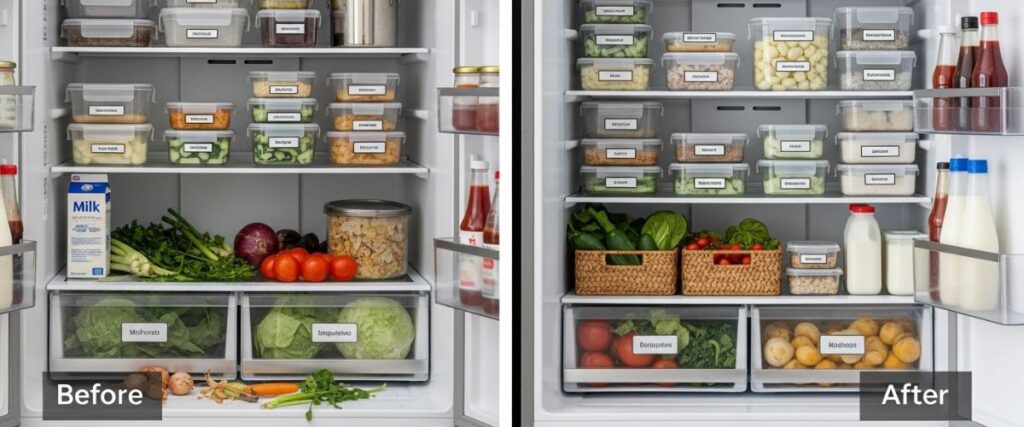
Label containers with masking tape and marker noting the contents and date prepared. This simple habit prevents mystery containers and food waste.
Step 4: Implement the FIFO Method
FIFO (First In, First Out) is a restaurant industry standard that works beautifully for home kitchens:
- Place newer items behind older ones
- Keep items expiring soonest at the front
- Check dates weekly and plan meals around what needs using first
This method alone can reduce your food waste by 40-50%.
Step 5: Create Designated Zones
Use small bins or trays to create zones within your fridge:
- Breakfast bin: Butter, cheese slices, jam, bread spreads
- Snack bin: Cut fruits, boiled eggs, evening snacks
- Kids’ zone: Lower shelf items they can reach independently
- Meal prep bin: Pre-chopped vegetables and prepared ingredients
These zones make it easy for everyone in the family to find what they need without rummaging through the entire fridge.
Smart Storage Hacks for Indian Ingredients
Keeping Coriander and Curry Leaves Fresh
Trim the stems, wash thoroughly, and wrap in paper towels before storing in an airtight container. Change paper towels every 2-3 days. This keeps herbs fresh for 2 weeks instead of 2-3 days.
Preventing Ginger-Garlic Paste Spoilage
Store homemade ginger-garlic paste with a thin layer of oil on top. This prevents oxidation and extends freshness to 3-4 weeks. Always use a clean, dry spoon to prevent contamination.
Managing Multiple Dabba Containers
Use a turntable or lazy Susan on one shelf specifically for all your dabbas (containers). This makes it easy to rotate and access items at the back without moving everything.
Storing Coconut and Tamarind
Fresh coconut stays good for 5-7 days when stored in an airtight container with a little water. Tamarind paste lasts 2-3 months when stored in a glass container with a layer of oil on top.
Maximizing Freezer Space
Freeze chapatis, parathas, and puris with parchment paper between each to prevent sticking. Store in labeled zip-lock bags noting the date. Use frozen rotis within 2-3 months for best quality.
Common Fridge Organisation Mistakes to Avoid
Overstuffing the Fridge
Cramming your fridge beyond 70-75% capacity blocks air circulation, forcing the compressor to work harder and increasing electricity bills by 15-20%. It also creates cold spots and warm pockets where food spoils faster.
Leave space between items for air to circulate. If your fridge regularly feels too full, it’s time to audit what you’re storing and eliminate unnecessary items.
Storing Everything in the Fridge
Not all foods benefit from refrigeration:
- Keep outside: Onions, potatoes, tomatoes (until cut), whole pumpkin, garlic bulbs
- Counter storage: Bananas, mangoes, bread (for daily use)
- Pantry storage: Oils, rice, lentils, spices
Refrigerating these items actually reduces their flavor and texture quality.
Using the Wrong Containers
Storing food in the same vessels you cooked in creates multiple problems:
- Large pots take up excessive space
- Metal containers can react with acidic foods
- Uncovered food dries out and absorbs odors
Transfer everything to appropriate-sized storage containers within 2 hours of cooking.
Ignoring the Manual
Your refrigerator manual contains specific guidance about optimal temperature settings, shelf weight limits, and maintenance schedules. Most Indian households set fridges too cold (wasting electricity) or too warm (spoiling food).
The ideal refrigerator temperature is 3-4°C and freezer at -18°C. Use a fridge thermometer to verify—built-in displays can be inaccurate.
Weekly Fridge Maintenance Routine
Monday: Quick Inventory Check
Before grocery shopping, spend 10 minutes checking what’s already in your fridge. Note items that need using up and plan meals around them. This prevents buying duplicates and reduces waste.
Wednesday: Mid-Week Wipe Down
Quickly wipe shelves with a damp cloth, especially after any spills. Check leftover containers and discard anything older than 3-4 days.
Saturday: Deep Clean and Reorganize
Remove everything from one section, clean thoroughly, check expiry dates, and reorganize. Rotate this through different zones weekly so the entire fridge gets attention monthly.
Seasonal Adjustment Tips
Summer Months (March-June)
- Reduce fridge temperature by 1°C to compensate for ambient heat
- Store cut fruits and vegetables immediately
- Keep water bottles and beverages in maximum quantity
- Increase frequency of cleaning to twice weekly
- Watch dairy products more closely—they spoil faster
Monsoon Season (July-September)
- Dry all vegetables thoroughly before storing (excess moisture causes faster spoilage)
- Add extra paper towels in crisper drawers
- Be extra vigilant about mold on leftovers
- Store bread in the fridge to prevent fungal growth
- Clean door seals weekly to prevent mildew
Winter Months (November-February)
- You can store hardy vegetables like carrots and beans outside the fridge
- Reduce the quantity of items in the fridge
- Increase temperature setting slightly to save energy
- More items can stay fresh on the counter
- Perfect time for deep freezer organization
Energy and Money-Saving Benefits
Reduced Electricity Bills
An organized fridge runs 10-15% more efficiently because:
- The compressor doesn’t overwork to maintain temperature
- You spend less time with the door open searching for items
- Proper airflow means more even cooling
- The motor cycles on and off less frequently
For a standard 250L fridge, this translates to savings of ₹300-500 annually.
Less Food Waste
The average Indian household wastes ₹2,000-4,000 worth of groceries monthly due to spoilage. Proper organisation helps you:
- See what you have before it spoils
- Use items in the right order
- Plan meals around expiring ingredients
- Store food correctly to extend freshness
This can save ₹20,000-40,000 annually—enough for a family vacation.
Adapting Organisation for Different Fridge Sizes
Small Fridge (150-200L) – Common in Rented Homes
Priority strategies:
- Use stackable containers exclusively
- Store only essentials; keep extras in a cool pantry area
- Use fridge door storage maximally
- Keep only 2-3 days of fresh vegetables
- Freeze prepared items you don’t need immediately
Medium Fridge (250-350L) – Most Indian Households
Optimal setup:
- Dedicate entire top shelf to leftovers and ready-to-eat items
- Middle shelf for dairy and eggs
- Bottom shelf exclusively for raw proteins
- Both crisper drawers for vegetables and fruits separately
- Use door for all condiments and beverages
Large Fridge (400L+) – Joint Families
Advanced organisation:
- Create person-specific zones (kids’ snacks, husband’s work lunch items)
- Dedicate one shelf to weekly meal prep containers
- Use the extra space for bulk storage of frequently used items
- Install additional small bins to prevent items getting lost
- Consider a separate section for festival/party prep ingredients
Frequently Asked Questions
How often should I completely clean out my fridge?
A complete deep clean should happen once a month. However, you should do quick daily tidying (2 minutes) and weekly section cleaning (10-15 minutes). This prevents major messes and makes the monthly deep clean much faster. Always do a thorough clean before major festivals or when you notice unpleasant odors.
Why do my vegetables wilt within 2-3 days even when refrigerated?
Vegetables wilt due to excess moisture or lack of airflow. The solution is wrapping them in newspaper or paper towels before placing them in crisper drawers—this absorbs excess moisture while maintaining enough humidity. Also, never wash vegetables before storing them (unless you’re drying them completely), as moisture accelerates decay. Buy smaller quantities more frequently rather than storing large amounts that deteriorate.
Can I store hot food directly in the fridge?
Never put piping hot food directly in the fridge—this raises the internal temperature, forcing the compressor to overwork and potentially affecting other stored foods. Let cooked food cool to room temperature for 30-45 minutes (but not more than 2 hours for food safety). Then transfer to airtight containers and refrigerate. For faster cooling, divide large quantities into smaller shallow containers.
What’s the best way to remove stubborn fridge odors?
Place an open box of baking soda or activated charcoal on the top shelf—these absorb odors naturally. Replace every 3 months. For immediate odor removal, wipe all surfaces with a solution of equal parts water and white vinegar. Remove the source of the odor (usually old food or strong-smelling spills) and ensure all foods are stored in airtight containers. Coffee grounds in an open container also work excellently for stubborn odors.