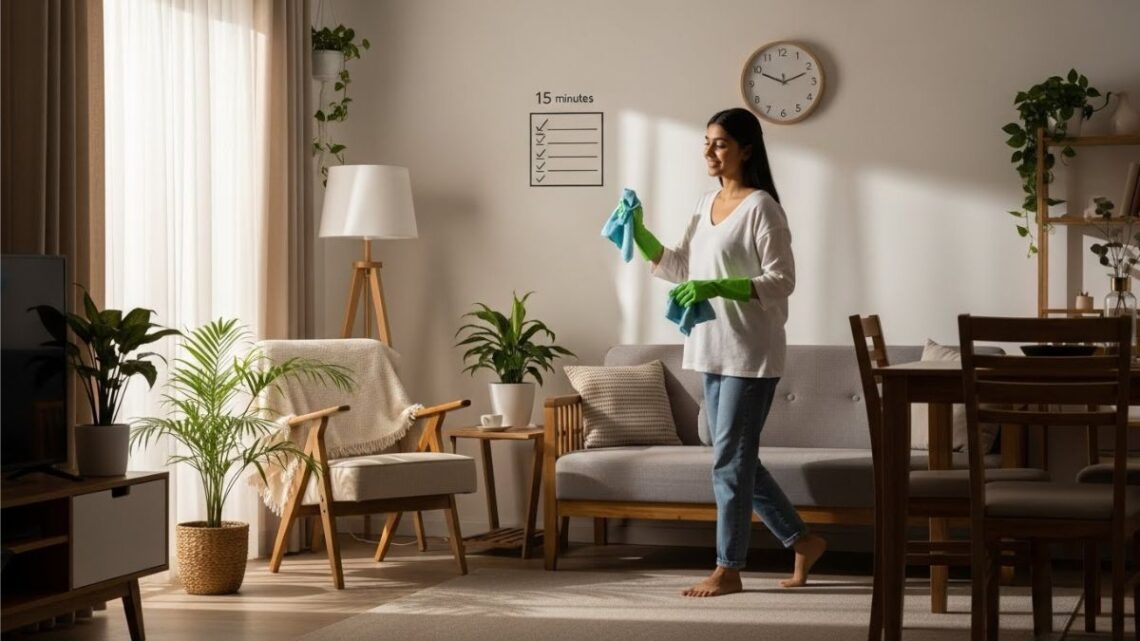
The 15-Minute Daily Cleaning Routine That Actually Works
Disclaimer: This article may contain affiliate links. If you purchase through these links, I may earn a small commission as an Amazon Associate—at no additional cost to you.
Most Indian households struggle with maintaining cleanliness because they rely on exhaustive weekend cleaning sessions. This approach leads to burnout, clutter accumulation, and visible mess throughout the week.
The 15-minute daily method works because it prevents dirt from settling in the first place. When you address spills, dust, and clutter immediately, you eliminate the need for scrubbing hardened stains or reorganizing piles of items later.
Research from the American Cleaning Institute shows that daily maintenance cleaning reduces overall cleaning time by 40% compared to periodic deep cleaning. For busy homemakers juggling multiple responsibilities, this means reclaiming hours each week while maintaining higher cleanliness standards.
This routine also supports mental well-being. A clean environment reduces stress hormones like cortisol by up to 20%, according to studies published in the Personality and Social Psychology Bulletin. When your home stays consistently clean, you create space for mindfulness and intentional living.
The Exact 15-Minute Breakdown: What to Clean and When
Minutes 1–5: Kitchen Reset
The kitchen generates the most mess in any home. Focus on these tasks:
- Clear the countertops – Put away ingredients, appliances, and utensils left out after meals
- Wipe down surfaces – Use a damp microfiber cloth on counters, stovetop, and dining table
- Load the dishwasher or wash dishes – Don’t let vessels pile up; tackle them immediately after meals
- Sweep the floor – Focus on visible crumbs and spills near the cooking area
Pro tip for Indian kitchens: Keep a small bowl of water with lemon and baking soda ready. It cuts through oil stains on counters and removes masala smells instantly.
Minutes 6–9: Bathroom Quick Clean
Bathrooms harbor bacteria and moisture, making daily maintenance critical in Indian climates.
- Spray and wipe the sink – Use a multipurpose cleaner or vinegar solution
- Clean the toilet bowl – A quick scrub with a brush takes 60 seconds
- Wipe mirrors and taps – Removes water spots and toothpaste splatter
- Squeegee shower walls (if applicable) – Prevents mold growth in humid conditions
For homes with multiple bathrooms, rotate focus—clean one bathroom daily rather than all at once.
Minutes 10–13: Living Area Speed Tidy
These spaces accumulate visible clutter that affects your home’s overall appearance.
- Fluff cushions and fold throws – Creates an instant neat look
- Clear surfaces – Remove cups, remote controls, magazines, and kids’ toys
- Spot vacuum or sweep high-traffic zones – Entry areas, under the dining table, around sofas
- Organize shoes near the entrance – Use a designated rack or basket
Mindful living connection: A clutter-free living room supports better focus and reduces visual overwhelm, essential principles in minimalist philosophy.
Minutes 14–15: Final Walkthrough
Use the last 2 minutes to scan your home:
- Put away anything out of place
- Take out trash from small bins (bedroom, bathroom)
- Do a quick dusting of one visible shelf or surface
- Open windows briefly for fresh air circulation
This walkthrough ensures nothing is forgotten and gives you a sense of completion.
Time-Blocking Strategy: When to Schedule Your 15 Minutes
Consistency matters more than perfection. Choose a time slot that aligns with your daily routine:
- Morning routine (7:00–7:15 AM): Ideal for homemakers who want a clean start to the day. Complete your cleaning before children wake up or after morning tea.
- Post-lunch slot (2:00–2:15 PM): Works well after clearing lunch dishes. The afternoon energy dip makes simple cleaning tasks manageable without mental strain.
- Evening wind-down (8:00–8:15 PM): Perfect for families who want to wake up to a clean home. Do a final reset after dinner before relaxation time.
Set a phone timer or use a cleaning app to stay accountable. The time limit prevents overthinking and forces you to work efficiently.
Tools You Actually Need (Minimalist Approach)
You don’t need expensive equipment or a storage room full of products. Here’s what works:
Essential cleaning tools
- 2–3 microfiber cloths (different colors for kitchen, bathroom, surfaces)
- One multipurpose cleaning spray (vinegar + water + few drops of dish soap)
- A good broom or stick vacuum
- Toilet brush and bathroom cleaner
- Small caddy to carry supplies room to room
Optional but helpful
- Squeegee for bathroom tiles
- Extendable duster for ceiling fans
- Natural air freshener (essential oils or dried herbs)
Minimalist cleaning philosophy emphasizes quality over quantity. One effective multipurpose cleaner replaces 5–6 specialized products, reducing chemical exposure and saving storage space.
Common Mistakes That Ruin Your 15-Minute Routine
Trying to Deep Clean Everything
The 15-minute method is about maintenance, not perfection. Save deep tasks like scrubbing grout, washing curtains, or cleaning ceiling fans for monthly sessions.
Getting Distracted by Organization Projects
Don’t start reorganizing your spice rack or sorting through mail during this time. If you find items out of place, quickly move them to the correct room and deal with organization separately.
Skipping Days and Playing Catch-Up
Missing 2–3 days doubles your workload. Even on busy days, doing a modified 8-minute version maintains momentum better than skipping entirely.
Using Too Many Products
Multiple sprays, scrubs, and solutions waste time. Stick to your core toolkit—you can clean 90% of your home with water, vinegar, and dish soap.
How This Routine Supports Mindful and Minimal Living
Minimalism isn’t about empty rooms—it’s about intentional space management. A 15-minute cleaning routine removes decision fatigue around housework.
When you know exactly what to clean and for how long, you eliminate the mental burden of “I should really clean the house.” This clarity creates psychological space for hobbies, family time, and self-care.
Mindfulness connection: The repetitive, focused nature of these tasks serves as active meditation. Wiping surfaces, organizing items, and creating order can ground you in the present moment, reducing anxiety about past or future tasks.
For those pursuing minimal lifestyles, daily maintenance reveals what you actually use versus what collects dust. Over time, you’ll naturally declutter items that create cleaning work without adding value to your life.

Adapting the Routine for Different Home Sizes
- Small Apartments (1-2 BHK): Stick to the standard 15-minute plan. You might finish faster and can add extra attention to one area like the balcony or entryway.
- Medium Homes (3 BHK): Rotate focus areas. Clean the master bedroom and bathroom one day, kids’ rooms the next. Living and kitchen areas stay in daily rotation.
- Large Homes or Joint Families: Divide the home into zones. Each family member takes one zone, or you tackle different floors on alternate days. Adjust to 20 minutes if needed, but maintain the focused timing structure.
- Working Professionals with Limited Time: Do a 10-minute version on weekdays (kitchen + bathroom only) and add living areas on weekends. Consistency matters more than completing every task daily.
Seasonal Adjustments for Indian Homes
Monsoon months (June–September)
- Extra attention to drying bathroom floors to prevent slipping
- Wipe window sills and check for water seepage
- Air out rooms daily despite humidity
Summer (March–May)
- Focus on dust control—use damp cloths instead of dry dusting
- Clean AC filters weekly (separate 5-minute task)
- Keep floors cool by mopping with water daily
Festival seasons (Diwali, Holi, Eid)
- Maintain the 15-minute routine even during preparation chaos
- It prevents festival cleaning from becoming overwhelming
- Your daily baseline stays intact despite extra activity
Winter (November–February)
- Reduce bathroom cleaning frequency slightly if usage is lower
- Add 2 minutes for dusting heaters or checking for carpet dirt
- Open windows during the warmest part of the day
Tracking Progress Without Pressure
Avoid the perfectionism trap. You’re not aiming for magazine-cover homes—you’re maintaining comfortable, functional living spaces.
Simple tracking methods
- Use a habit tracker app (Habitica, Streaks, or simple Google Calendar)
- Check off each area as you complete it
- Note what takes longer than expected and adjust timing next week
Success indicators
- You can find things easily without searching
- Guests can visit with 10 minutes’ notice without panic
- Cleaning feels automatic, not like a major chore
- Your stress levels decrease when you’re at home
Remember: Missing one day doesn’t erase your progress. Simply resume the next day without guilt or extra pressure.
Making It Work with Kids at Home
Children and cleanliness seem incompatible, but small adjustments help:
Involve them age-appropriately
- Toddlers (2–4): Hand them a cloth to “help” wipe low surfaces
- Young kids (5–8): Give specific tasks like organizing toys in a basket
- Older kids (9+): Assign one room they’re responsible for during your 15 minutes
Timing strategies
- Clean during naptime for babies
- Do it while kids are eating breakfast or having screen time
- Make it part of the bedtime routine (kids help before stories)
Mindset shift: Accept that homes with children won’t stay pristine. Your 15-minute routine creates a livable baseline, not perfection. That’s enough.
The Psychology Behind Why This Works
Behavioral science shows that small, consistent actions create lasting change better than occasional major efforts.
- Habit stacking: By linking cleaning to an existing daily event (after breakfast, before dinner), you trigger automatic behavior without relying on motivation.
- The Zeigarnik Effect: Unfinished tasks create mental tension. Completing your 15-minute routine each day provides psychological closure, even if your entire home isn’t spotless.
- Reduced activation energy: James Clear’s research on habit formation shows that reducing the friction to start a task increases follow-through. Fifteen minutes feels achievable; two hours feels overwhelming.
- Visible progress: Seeing clean counters and organized spaces triggers dopamine release, reinforcing the behavior. This positive feedback loop makes the routine self-sustaining after 3–4 weeks.
Common Questions About Making It Sustainable
What if I have chronic pain or fatigue? Modify the routine into three 5-minute sessions spread throughout the day. Or lower the target to 10 minutes total. Some maintenance always beats none.
Can I hire help and still do this? Absolutely. If you have domestic help for deep cleaning, use your 15 minutes for quick daily resets. This prevents mess from accumulating between helper visits.
What about laundry and dishes? These are separate routines. Load laundry in the morning and fold while watching TV. Wash dishes immediately after meals as part of kitchen cleanup. Don’t try to fit everything into 15 minutes.
How do I maintain motivation? Track your streak. After 30 days, the routine becomes automatic. Also, notice how much calmer you feel when your home is consistently tidy—that feeling becomes its own motivation.
A 15-minute daily cleaning routine isn’t about achieving perfection—it’s about creating sustainable peace in your living space. For Indian homemakers managing household responsibilities and individuals pursuing mindful, minimal lifestyles, this approach offers freedom from cleaning overwhelm.
By focusing on high-impact areas and maintaining consistency over intensity, you reclaim hours each week. Those hours can go toward hobbies, family time, self-care, or simply sitting with a cup of chai without guilt about undone housework.
Start tomorrow. Set a timer. Choose your 15-minute window. Let the simplicity surprise you.
FAQs About the 15-Minute Daily Cleaning Routine
Don’t double up—just resume your regular 15-minute session the next day. If you anticipate missing days due to travel or illness, do a slightly longer 20-minute session beforehand.
Yes—split it into a 7-minute morning session (kitchen and bathroom) and 8 minutes in the evening (living areas), or do the full 15 minutes during your evening wind-down.
Most people find it feels natural after 3–4 weeks, though research suggests habits fully form in 21–66 days. Use phone alarms for the first month, then link it to existing daily triggers like “after morning tea.”
Yes, for daily maintenance—it prevents dirt buildup so your home stays consistently tidy. You’ll still need monthly deep tasks like scrubbing tiles or cleaning the fridge, but these become much quicker.
Whenever you can be most consistent—morning for a fresh start, evening to wake up to tidiness, or afternoon as an active break. Test different times for a week each to find what works best.