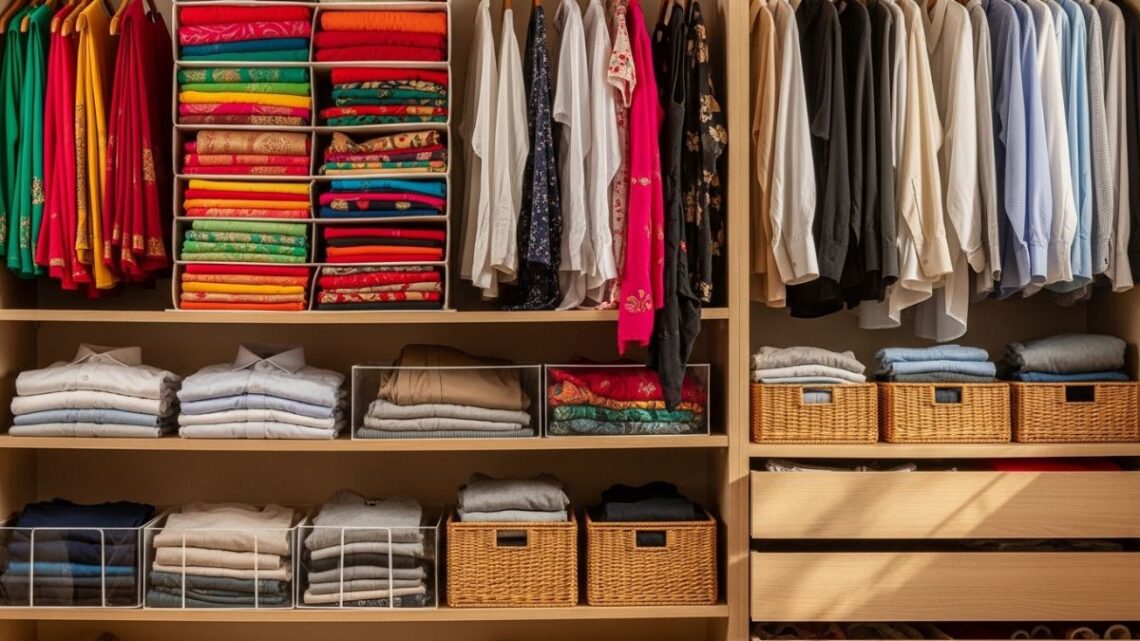
How to Organize Clothes in Closet by Category
Disclaimer: This article may contain affiliate links. If you purchase through these links, I may earn a small commission as an Amazon Associate—at no additional cost to you.
Category-based organization is the most sustainable way to arrange an Indian wardrobe because it mirrors how you actually get dressed. Group tops, bottoms, ethnic wear, and formal wear separately, give each group its own zone in the closet, then sort within each group by color or how often you wear it.
When you wake up thinking “I need a formal shirt,” a category system means you know exactly where to look instead of digging through mixed piles. It also exposes duplicate purchases fast; when five black kurtas turn up hanging together, you think twice before buying a sixth.
The Six Categories Most Indian Wardrobes Need
- Tops: shirts, blouses, kurtis, t-shirts, tunics
- Bottoms: jeans, trousers, palazzos, leggings, skirts
- Ethnic Wear: sarees, salwar suits, anarkalis, lehengas
- Western Formal: blazers, office shirts, work dresses
- Occasion Wear: party outfits, wedding clothes, festive attire
- Seasonal & Athleisure: winter wear, activewear, sleepwear, loungewear
Not every closet needs all six in equal measure. Someone working from home needs more casual and athleisure space; someone attending frequent events needs a bigger occasion-wear section. Customize the split, not the categories themselves.
Setting Up the System
Start with a full audit
Empty the closet completely and sort everything into three piles: keep, donate, and discard. Indian wardrobes tend to accumulate emotional purchases, wedding gifts, clothes from before a pregnancy, items worn once for a function years ago. Be honest about what actually serves your life now, not what you might wear someday.
Match categories to how you actually live
Not an idealized version of your routine. A corporate job needs a solid formal-wear category; working from home doesn’t. A frequent traveler benefits from a small “travel favorites” section pulled from across categories. Write down your final list and roughly what share of closet space each deserves, this stops the system from drifting back into guesswork.
Assign each category a physical zone
Eye-level and the middle hanging section go to whatever you reach for most, daily ethnic wear for a homemaker, office wear for a working professional. Upper shelves take seasonal and occasion wear you only need a few times a year. Lower shelves and drawers suit folded bottoms and heavier items that handle weight well. Mark the boundary between categories with dividers, dedicated hangers, or a sticker on the rod, so the system holds even when you’re getting dressed in a hurry.
Pick one way to sort within each category, and stick to it
Common options: by formality (casual to formal), by color (rainbow order), by how often you wear it (weekly rotation at the front, rare pieces at the back), or by full outfit sets (a saree kept with its matching blouse). Mixing two systems across different categories is the fastest way to undo all this work within a month.
Organizing Specific Categories
Tops and kurtis
Hang delicate fabrics and structured blouses; fold cotton t-shirts and knitwear, since hanging stretches them out of shape over time. Slim velvet hangers save real rod space over plastic ones and stop garments slipping off. Within kurtis, separate by length first (short, medium, long, anarkali-style), then by fabric weight or color.
Bottoms
Hang jeans and trousers by the hem on clip hangers rather than by the waistband, it fits noticeably more per foot of rod space. Palazzos and other loose pants wrinkle easily and need hanging too. Leggings fold well using the file-fold method, stood upright in a drawer so you can see every pair without unstacking the whole pile.
Sarees
For sarees worn regularly, specialized saree hangers holding 5-10 pieces each work best, grouped by fabric: cotton and handloom, silk, georgette and chiffon, heavy wedding wear. For a large collection you rarely rotate, breathable cotton bags or muslin-separated folding on a shelf works better. Skip plastic covers for long-term storage; they trap moisture and cause yellowing over time.
Salwar suits
Keep the three pieces together, always. Hang the kameez and clip the folded salwar and dupatta to the same hanger, or store the salwar-dupatta pair in a labeled drawer directly beneath the hanging kameez. Either way, the goal is never having to hunt for a matching dupatta on a rushed morning.
Lehengas and heavy ethnic wear
Padded hangers with breathing room between pieces, covered in cotton, not plastic. Store the dupatta and blouse separately in a labeled box noting the color or occasion, so a wedding-week search doesn’t turn into an afternoon project.
Western formal wear
Hang blazers on wooden or padded hangers that keep the shoulder shape intact, and hang formal shirts rather than folding them to avoid crease lines. If mornings are rushed, a “work week” section with Monday-Friday outfits pre-picked genuinely saves time.
Labels Are What Make It Last
A category system without labels slowly drifts back to chaos, especially in a shared closet. Label shelves and sections by category name, label every closed storage box with what’s inside, and label drawer dividers if anyone else uses the closet too. A basic label maker or even masking tape and a marker works fine; bilingual labels help if family members are more comfortable in Hindi or a regional language than English.
Mistakes That Undo the System
- Too many micro-categories. More than 8 categories usually creates hesitation, not clarity. If you often pause wondering where something belongs, you have too many divisions.
- Mixing sorting methods across categories. Color-coding tops but sorting bottoms by occasion breaks the mental model that makes this work.
- Building categories around an idealized routine rather than your real one. An elaborate office-wear section is wasted space if you work from home.
- Never revisiting it. A new job, a baby, or a big life change should trigger a quick review, not a full redo, just an update to reflect how you’re actually living now.
Quick Checklist
- All clothes sorted into 5-8 main categories
- Each category has one clear physical zone
- One consistent secondary sort (color, formality, or frequency) applied throughout
- Storage boxes and shelves labeled
- Most-worn category placed at eye level
- Ethnic wear sets (saree plus blouse, salwar suit pieces) kept together
- A quick review scheduled after any major life change
Pick just one category this week, whichever one frustrates you most every morning, and get it fully sorted before moving to the next. A closet organized this way tends to stay organized, because the system matches how you actually get dressed, not an idealized version of it.
Frequently Asked Questions
Should I organize by category or by color?
Category first, then color within each group. This matches how you actually think when getting dressed, “I need a formal shirt,” not “I need something blue.”
How many categories should my closet have?
Most Indian wardrobes work well with 5-8. Smaller closets do better with 4-5 broad groups; larger ones can support more detailed splits.
How do I arrange salwar suits in my wardrobe?
Keep all three pieces together. Hang the kameez, then clip the folded salwar and dupatta to the same hanger, or store them in a labeled drawer directly below it.
How do I store ethnic wear without wrinkling it?
Use saree hangers or muslin-layered folding, never plastic covers, which trap moisture. Lehengas need padded hangers and breathing room between pieces.