Front-Loading or Top-Loading Washing Machine: Which Is Better for Indian Homes?
Disclaimer: This article may contain affiliate links. If you purchase through these links, I may earn a small commission as an Amazon Associate—at no additional cost to you.
Choosing between a front-loading and top-loading washing machine isn’t just about features—it’s about how the machine fits into your daily routine, your home’s infrastructure, and your long-term costs.
In Indian homes, factors like water quality, electricity costs, space constraints, and laundry volume create unique considerations. A machine that works perfectly in one household might be completely wrong for another.
This guide breaks down every practical difference between front-load and top-load machines so you can make an informed decision based on your actual needs, not just marketing claims.
Understanding the Basic Differences
Front-Loading Washing Machines
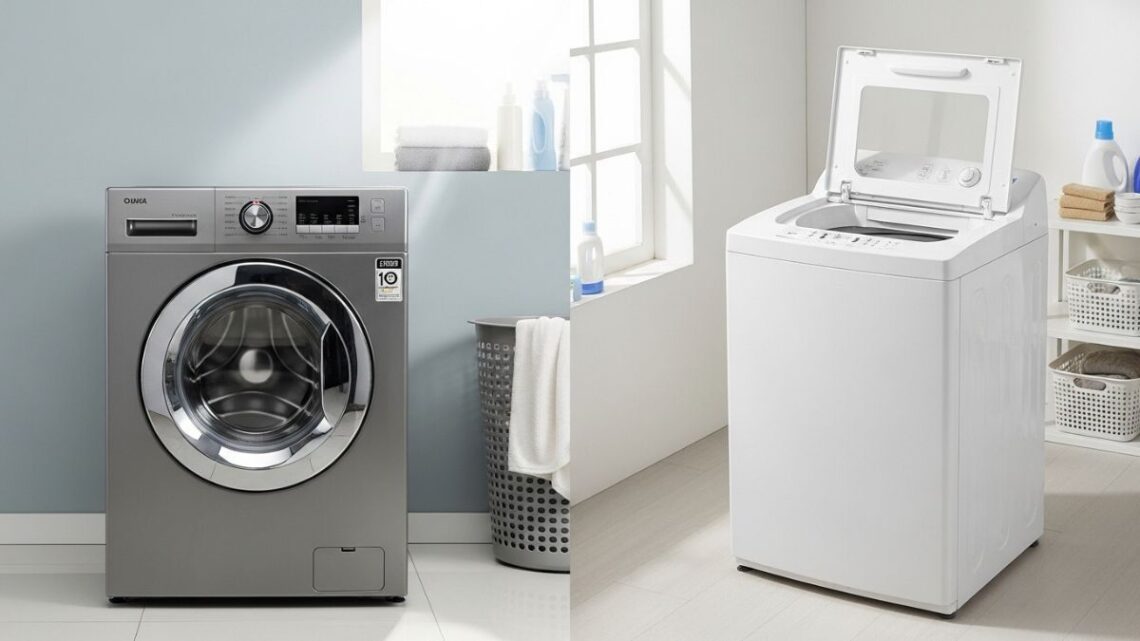
Front-loaders have a door on the front and use a horizontal drum that tumbles clothes through a small amount of water at the bottom of the drum.
- How they work: Clothes are lifted and dropped repeatedly through water and detergent, creating a gentle washing action similar to hand-washing.
- Key characteristic: Uses significantly less water (40-60 liters per load) compared to top-loaders.
Top-Loading Washing Machines
Top-loaders have a lid on top and use a vertical drum with an agitator (central spindle) or impeller (bottom disc) that moves clothes through water.
- How they work: The drum fills with water, submerging clothes completely, and the agitator/impeller creates friction to clean fabrics.
- Key characteristic: Uses more water (80-120 liters per load) but washes faster.
Detailed Comparison: front-load vs top-load
Water Consumption
Front-load
- Uses 40-60 liters per 6-7kg load
- High-efficiency models use even less (30-40 liters)
- Ideal for areas with water scarcity or high water costs
- Annual water savings can reach 15,000-20,000 liters compared to top-loaders
Top-load
- Uses 80-120 liters per 6-7kg load
- Fully automatic models use slightly less than semi-automatic models
- Better suited for areas with an ample water supply
- Some modern impeller-based top-loaders are more efficient than traditional agitator models
Winner: front-load saves 40-50% water, making it significantly more economical in the long run for most Indian cities facing water constraints.
Energy Efficiency
Front-load
- Consumes 50-60% less electricity than top-loaders
- Faster spin speeds (1000-1400 RPM) extract more water, reducing dryer time
- Most models are 4-5 star energy rated
- Higher upfront cost paid back through lower electricity bills over 3-5 years
Top-load
- Higher energy consumption due to longer wash cycles and heating requirements
- Typical spin speeds: 600-800 RPM (clothes retain more moisture)
- Most models are 2-3 star energy rated
- Lower electricity bills than front-load initially, but higher over the machine’s lifetime
Winner: front-load is more energy-efficient, saving ₹1,500-3,000 annually on electricity for average usage.
Washing Performance and Fabric Care
front-load
- Gentler tumbling action reduces fabric wear
- Better for delicate items (silk, wool, embroidered ethnic wear)
- Excellent stain removal due to longer wash cycles
- Ideal for preserving expensive clothing investments
- Better suited for baby clothes and allergy-prone households (thorough rinsing)
Top-load
- Agitator models can be harsh on fabrics, causing faster wear
- Impeller models (without a central agitator) are gentler but less common
- Adequate for everyday cotton and synthetic wear
- Faster wash cycles mean less fabric exposure to friction
- Better for heavily soiled work clothes or outdoor gear
Winner: front-load offers superior fabric care, extending clothing lifespan by 20-30% according to industry tests.
Speed and Convenience
front-load
- Wash cycles: 60-120 minutes (longer due to water efficiency)
- Cannot add clothes mid-cycle (door locks during operation)
- Requires bending to load/unload (difficult for the elderly or those with back problems)
- Stackable design or can fit under countertops
Top-load
- Wash cycles: 30-60 minutes (faster overall)
- Can add forgotten items mid-cycle (major convenience advantage)
- Easy loading without bending (ergonomic for all ages)
- Requires more vertical space (cannot stack or fit under counters)
Winner: top-load wins for convenience and speed—critical for busy households or those with mobility concerns.
Space Requirements
Tront-load
- Footprint: Typically smaller width (55-60cm)
- Can be stacked with dryers to save floor space
- Fits under kitchen counters or in bathroom cabinets
- Ideal for apartments and small utility areas
- Top surface can be used as counter space
Top-load
- Footprint: Slightly larger width and requires clearance above for lid opening
- Cannot stack or fit under counters
- Needs dedicated floor space
- Better suited for homes with separate laundry rooms
- Top surface cannot be used (lid must open freely)
Winner: front-load is better for space-constrained urban homes and apartments.
Cost Considerations
| Capacity | front-load Price Range | top-load Price Range |
| 6-7 kg | ₹25,000 – ₹45,000 | ₹10,000 – ₹25,000 |
| 8-9 kg | ₹35,000 – ₹60,000 | ₹15,000 – ₹35,000 |
| 10+ kg | ₹45,000 – ₹80,000 | ₹20,000 – ₹45,000 |
Front-load
- Higher upfront cost (60-80% more expensive)
- Lower running costs (water, electricity, detergent)
- Breakeven point: 3-5 years of regular use
- Higher resale value
Top-load
- Lower upfront cost (more budget-friendly)
- Higher running costs over time
- No breakeven calculation needed (cheaper initially)
- Lower resale value
Winner: Depends on budget. top-load for immediate affordability; front-load for long-term savings.
Maintenance and Durability
Front-load
- Rubber door gasket prone to mold in humid climates (requires regular cleaning)
- More complex mechanism = potentially higher repair costs
- Average lifespan: 10-15 years with proper maintenance
- Must leave the door slightly open after use to prevent odor
- Monthly drum cleaning is recommended
Top-load
- Simpler mechanism = easier, cheaper repairs
- Agitator models: the agitator can break or become loose over time
- Average lifespan: 12-18 years (fewer moving parts)
- Less prone to mold and odor issues
- Minimal maintenance required
Winner: top-load requires less maintenance and has a slightly longer lifespan.
Water Quality Compatibility
Front-load
- Sensitive to hard water (causes scaling on the drum and heating elements)
- Requires a water softener in hard water areas (additional cost)
- Low water usage means detergent residue can build up if the wrong detergent is used
- Must use low-suds detergent specifically designed for Front-loaders
Top-load
- Better tolerance for hard water
- Can use regular detergent (low-suds not mandatory)
- Higher water volume helps rinse away detergent better
- Fewer scaling issues due to no heating element in many models
Winner: top-load is better for hard water areas common across India.
Detergent and Operating Costs
Front-load
- Requires special low-suds/HE (High Efficiency) detergent (₹50-100 more expensive per kg)
- Uses less detergent per load (20-30 grams)
- Annual detergent cost: ₹2,000-3,000 for regular use
- Water and electricity savings offset higher detergent costs
Top-load
- Works with regular detergent (more affordable options available)
- Uses more detergent per load (40-50 grams)
- Annual detergent cost: ₹1,500-2,500 for regular use
- Higher water and electricity costs add up over time
Winner: Similar annual costs when all factors are considered, but top-load offers more detergent flexibility.
Which Type Is Best for Different Indian Households?
Choose front-load If You
- Live in urban apartments with limited space
- Face water scarcity or high water bills
- Want to reduce electricity consumption (environmental or cost reasons)
- Have expensive ethnic wear, delicates, or baby clothes requiring gentle care
- Can afford a higher upfront investment for long-term savings
- Have access to soft water or are willing to install a water softener
- Don’t mind longer wash cycles
- Can comfortably bend to load/unload clothes
Choose Top-Load If You
- Have a tight budget and need immediate affordability
- Require faster wash cycles for daily convenience
- Need to add clothes mid-cycle frequently (common with kids)
- Have elderly family members or anyone with mobility/back issues
- Live in hard water areas without water softening infrastructure
- Have an adequate water supply
- Prefer simpler maintenance and repairs
- Have a dedicated laundry room with vertical clearance
Making the Final Decision: A Practical Framework
Budget-First Decision Tree
If budget under ₹25,000: Top-load is your practical choice If budget ₹25,000-40,000: Consider both; evaluate other factors If budget over ₹40,000: front-load offers better long-term value
Priority-Based Selection
If the top priority is:
- Saving water: front-load
- Saving time: top-load
- Fabric care: front-load
- Initial cost: top-load
- Space-saving: front-load
- Ease of use: top-load
- Energy efficiency: front-load
- Low maintenance: top-load
Test Your Decision
Before finalizing, ask yourself:
- Can I comfortably afford ₹10,000-15,000 more for potential long-term savings?
- Do I have a consistent water supply and soft/moderate water quality?
- Am I willing to wait 90 minutes for a wash cycle?
- Do I have space constraints that require compact/stackable design?
- Do I wash delicate or expensive clothing frequently?
Mostly yes? Consider front-load
Mostly no? top-load is likely better suited
Common Myths Debunked
Myth 1: Front-loaders always develop a bad odor
Reality: Odor occurs only with improper maintenance. Leaving the door slightly open after use and monthly cleaning prevents this entirely.
Myth 2: Top-loaders waste too much water
Reality: While they use more water than Front-loaders, modern impeller-based top-loaders are 30-40% more efficient than older agitator models.
Myth 3: Front-loaders are too delicate for Indian laundry
Reality: Front-loaders handle heavily soiled clothes excellently due to longer wash cycles and better detergent action. They’re just gentler on fabrics in the process.
Myth 4: Top-loaders don’t clean as well
Reality: top-loaders clean effectively, just using a different mechanism. Agitator models actually scrub clothes more aggressively (though this can damage fabric).
The front-load vs top-load debate has no single winner—only the right choice for your specific situation.
Front-loaders excel at efficiency, fabric care, and space-saving, making them ideal for urban apartments, water-conscious households, and those prioritizing long-term savings over initial costs.
Top-loaders win on convenience, speed, affordability, and simplicity, making them perfect for budget-conscious buyers, large families needing quick turnaround, and homes with hard water or unstable power supply.
The best washing machine is the one that matches your lifestyle, budget, and home infrastructure—not the one with the most features or highest price tag.
Evaluate your priorities honestly, calculate your actual costs over 5-10 years (not just purchase price), and choose the type that solves your specific laundry challenges. Both types wash clothes effectively; the difference lies in how well they fit into your daily life.
Frequently Asked Questions
For urban homes with space constraints and water scarcity, front-load machines are better long-term investments despite higher costs. However, if your budget is under ₹25,000, you have hard water, or need faster wash cycles for large families, top-load machines are more practical and cost-effective.
Yes, Front-loaders save ₹3,000-5,000 annually on water and electricity for average usage. Over 10 years, this totals ₹30,000-50,000 in savings, though the breakeven point is 3-5 years due to higher initial costs of ₹15,000-20,000 more than top-loaders.
Top-load machines last slightly longer (12-18 years vs 10-15 years) due to simpler mechanics. However, Front-loaders with proper maintenance—regular gasket cleaning, correct detergent use, and monthly drum cleaning—easily reach or exceed their expected lifespan.
No, Front-loaders require low-suds or HE (High Efficiency) detergent specifically formulated for them. Regular detergent creates excessive suds that damage the machine, leave residue on clothes, and void manufacturer warranties.