Village Business Ideas for Women in India — 2026 Guide
Disclaimer: This article may contain affiliate links. If you purchase through these links, I may earn a small commission as an Amazon Associate—at no additional cost to you.
Quick Answer
The best village business ideas for women in India include a tiffin service, pickle and papad making, organic farming, tailoring, agarbatti making, beauty services at home, and poultry or dairy farming. These require low initial investment, use skills most rural women already have, and have strong local and online market demand in 2026.
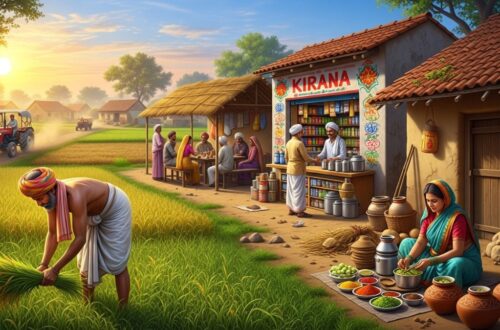
The idea that business opportunities are only available in cities is increasingly outdated. With improved internet connectivity, government schemes like PM Mudra Yojana and PMFME, and the explosive growth of quick-commerce and online marketplaces in India, women in villages and small towns have more accessible routes to income than ever before. This guide focuses specifically on business ideas suited to the Indian village context, low investment, skills-based, and with proven local and regional demand.
Why 2026 Is a Good Year to Start a Village Business in India
Several conditions have converged to make rural entrepreneurship more viable than at any previous point. Digital payment infrastructure (UPI) has reached most villages, removing the barrier of cash-only transactions. Government schemes like PM Vishwakarma Yojana, PMFME, and the National Rural Livelihood Mission provide subsidised loans, training, and marketing support specifically for rural women entrepreneurs. And the demand for locally made, authentic Indian food products, handicrafts, and home-grown produce has increased significantly as urban consumers seek alternatives to factory-made goods.
12 Village Business Ideas for Women in India
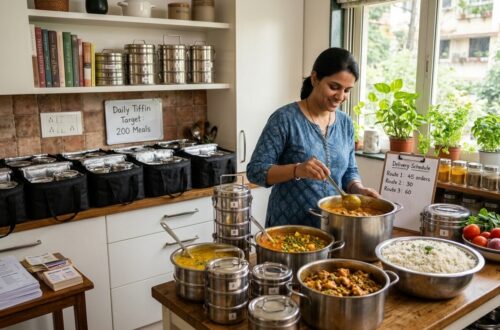
1. Tiffin Service (Home-Cooked Food Delivery)
A home tiffin service is one of the most accessible and consistently profitable businesses for women in any part of India. In villages near industrial areas, construction sites, government offices, or schools, there is reliable daily demand for freshly cooked, affordable home food. A tiffin service can start with 5 to 10 customers, requires only your kitchen and basic cooking equipment, and can scale to 30 to 50 customers using part-time help. Starting capital is typically ₹5,000 to ₹15,000 for containers, a delivery bicycle or arrangement, and initial ingredients. Monthly profit ranges from ₹8,000 to ₹25,000 depending on volume and local pricing.
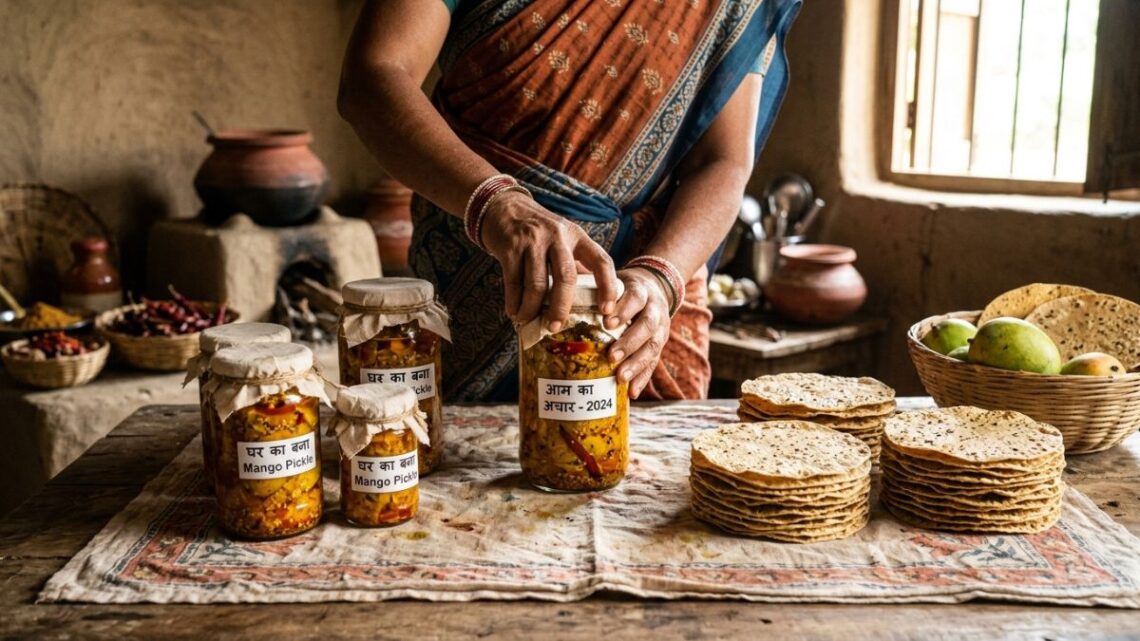
2. Pickle, Papad, and Homemade Masala Business
The Indian market for traditional, handmade food products, pickles, papads, chutneys, and masala powders has grown significantly as urban buyers seek authentic, preservative-free alternatives to branded products. If you make good achar or papad, you already have a business waiting to happen. Packaging for retail sale costs ₹3,000 to ₹8,000 as an initial investment. Platforms like Amazon Local, IndiaMART, and WhatsApp-based community groups allow you to sell beyond your village. Government schemes through the PMFME programme offer subsidised training and equipment loans for food processing businesses.
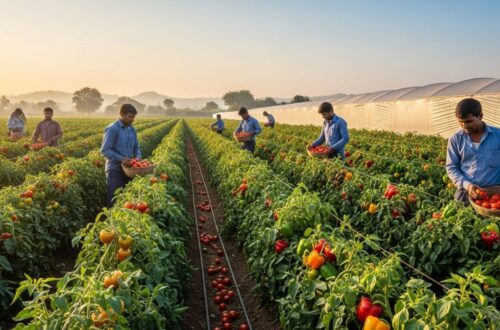
3. Organic Vegetable and Herb Farming
Urban demand for fresh, pesticide-free vegetables has created a real opportunity for small-scale organic farmers supplying local markets, restaurants, or direct-to-consumer through platforms like DeHaat, Ninjacart, and Ulink. Crops with strong demand and good returns per square metre include spinach, coriander, methi, brinjal, tomatoes, and chillies. Starting capital for a small kitchen garden scaled to commercial size (0.1 to 0.25 acres) is ₹10,000 to ₹30,000. Read our guide on the most profitable vegetables to grow in India for specific crop-by-crop returns.
4. Tailoring and Clothes Alteration Service
Tailoring remains one of the highest-demand services in Indian villages and small towns. Women who know how to stitch blouses, salwar-kameez sets, school uniforms, or do alterations can build a reliable client base quickly. A good sewing machine costs ₹6,000 to ₹15,000. Income ranges from ₹5,000 to ₹20,000 per month, depending on skill level and volume. Adding embroidery, hand stitching, or mirror work (especially in states like Gujarat and Rajasthan) commands premium pricing.
5. Agarbatti and Diya Making
Agarbatti (incense stick) and diya (clay lamp) making are traditional cottage industries with year-round and festival-season demand. The All India Agarbatti Manufacturers Association supports small producers, and government schemes provide raw materials at subsidised rates. Starting capital is ₹5,000 to ₹20,000 for raw materials and basic equipment. Finished products can be sold locally, to temples, through local retailers, or wholesale to agarbatti distributors. Many women’s self-help groups (SHGs) across India operate agarbatti-making units collectively, allowing shared investment and higher output.
6. Dairy Milk, Ghee, and Curd Selling
If your family keeps one or two cows or buffalo, you already have the foundation of a dairy micro-business. Selling fresh milk, handmade ghee, and curd locally or to nearby towns is a reliable daily income. Ghee made from desi cow milk commands ₹800 to ₹1,500 per kg in urban markets. Joining the local milk cooperative (Amul, Sudha, or state cooperatives) provides a guaranteed buyer for surplus milk at regulated prices.
7. Poultry Farming Desi Eggs and Chicken
Small-scale desi (country) poultry farming, 50 to 200 birds, requires a starting investment of ₹15,000 to ₹50,000 for housing and chicks, with recurring feed costs partially offset by foraging. Desi eggs sell at ₹8 to ₹15 each, significantly above the ₹5 to ₹7 price of commercial eggs, because urban buyers actively seek them for taste and perceived health benefits. This business generates both regular egg income and periodic income from selling birds.
8. Beauty and Parlour Services at Home
A home-based beauty parlour requires a starting investment of ₹8,000 to ₹25,000 for basic equipment, waxing kits, threading tools, facial products, nail care tools, and a comfortable chair. In villages and small towns where the nearest salon may be 10 to 20 km away, a home parlour fills a genuine gap. A 3-day beauty course from a recognised institution (available in most district headquarters for ₹2,000 to ₹8,000) provides the basic training needed. Monthly income ranges from ₹5,000 to ₹18,000 depending on the range of services and client volume.
9. Handloom Weaving and Textile Products
Women in states with strong handloom traditions, Assam, Odisha, West Bengal, Andhra Pradesh, Telangana, and Karnataka, have access to a globally recognised craft. Handloom sarees, stoles, and fabric sell at significant premiums compared to mill-made alternatives. Government schemes through the Office of the Development Commissioner (Handlooms) provide free looms, training, and market linkage. Platforms like Craftsvilla, Jaypore, and Etsy India allow direct access to urban and international buyers.
10. Mushroom Cultivation
Oyster and button mushroom cultivation is a rapidly growing cottage industry in India, with particularly strong government support through Krishi Vigyan Kendras (KVKs). Mushrooms grow quickly (harvest in 25 to 30 days from sowing), require minimal space (can be done in a single room), and sell for ₹120 to ₹200 per kg at local markets. Starting capital for a small unit is ₹10,000 to ₹30,000. The National Horticulture Board and several state agriculture departments offer subsidised mushroom cultivation training.
11. Vermicompost and Organic Fertiliser Production
With the push toward organic farming in India, the demand for vermicompost (earthworm-processed organic compost) from local farmers has increased significantly. Production requires minimal space, very low-cost inputs (organic waste and earthworms), and generates a reliable income selling to farmers and nurseries. Starting capital is ₹3,000 to ₹10,000. The process is easy to learn, and several NGOs and agriculture departments offer free training.
12. Online Reselling (Meesho and Similar Platforms)
Online reselling requires zero inventory investment. Platforms like Meesho allow anyone with a smartphone to share product listings on WhatsApp and earn a commission on each sale. For village women with large WhatsApp groups, family, neighbours, and school parents, this can generate ₹3,000 to ₹10,000 per month in commission income with no upfront cost. It is best used as a supplementary income alongside another business on this list, rather than as a primary venture.
Checklist Before Starting a Village Business
- Choose a business that uses a skill you already have or can learn quickly
- Estimate your starting capital honestly, including equipment, raw materials, and packaging
- Check whether your business qualifies for the PM Mudra Yojana or the PMFME subsidies
- Research your local market before investing. Talk to 5 potential customers first
- Set up a UPI account (PhonePe, Google Pay, or Paytm) before you start. Cash is not enough
- Join your local women’s self-help group (SHG) if you have not already. They provide loans, training, and collective bargaining power
- Register your food business with FSSAI if you are selling food products (even homemade ones)
Final Thoughts
The village economy is no longer an afterthought in India’s growth story. Government support, digital infrastructure, and growing urban demand for authentic rural products have created genuine income opportunities for women across India’s villages. The businesses in this guide are not theoretical; hundreds of thousands of Indian women are running them successfully right now. Choose the one that fits your skills and your village’s market, start small, and build from there.
For more business ideas related to farming and natural living, read our guide on the most profitable vegetables to grow in India in 2026.
Frequently Asked Questions
Which village business is most profitable for women in India?
Tiffin services, pickle and papad making, and organic vegetable farming consistently show the best returns relative to investment for rural women in India. Dairy and poultry are higher-investment but also higher-income. The best choice depends on your existing skills, available land, and local market.
What government schemes support rural women entrepreneurs in India?
Key schemes include PM Mudra Yojana (collateral-free loans up to ₹10 lakh), PMFME (subsidised loans and training for food processing), PM Vishwakarma Yojana (for craft and tool-based businesses), and the National Rural Livelihood Mission (NRLM) which works through women’s self-help groups across India.
How much investment do I need to start a business in a village?
Most of the businesses in this list can be started for ₹5,000 to ₹30,000. Tiffin services and reselling require the least capital. Poultry and dairy require the most but also generate the most consistent daily income. Government loans under Mudra Yojana can fund the starting capital with minimal interest.
Can I sell homemade food products online from a village in India?
Yes. Platforms like Amazon Local and IndiaMART accept registrations from across India. You will need an FSSAI registration for food products (the basic registration for home-scale production costs around ₹100 per year). WhatsApp-based community groups are also an effective local sales channel requiring no formal listing.
Is a SHG (self-help group) necessary to start a business?
Not necessary, but highly beneficial. SHGs provide access to subsidised group loans, collective purchasing of raw materials at lower cost, shared equipment, and support from government programmes that prioritise registered SHG members. If there is an active SHG in your village, joining it before starting a business is strongly recommended.
What is the easiest business to start for a village woman with no experience?
Online reselling through Meesho requires no experience, no investment, and can start immediately with a smartphone. For a skill-based business, a tiffin service uses cooking skills most women already have and requires the least non-kitchen equipment. Both are good starting points.
How long does it take to start earning from a village business?
A tiffin service can generate income within the first week of starting. Pickle and food product businesses typically take 2 to 4 weeks to build initial customers. Farming businesses take longer than one full growing cycle (4 to 12 weeks, depending on the crop) before the first harvest income. Mushroom cultivation generates income within 30 days.