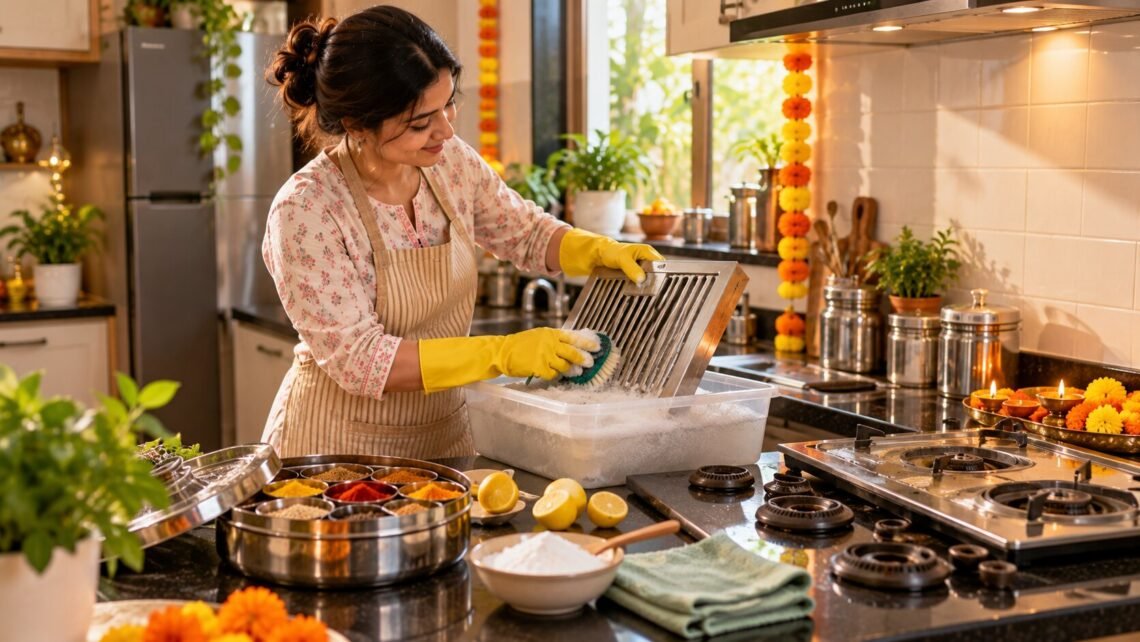
Kitchen Deep Cleaning Before Diwali: Chimney, Fridge, Stove and Masala Dabba
Disclaimer: This article may contain affiliate links. If you purchase through these links, I may earn a small commission as an Amazon Associate—at no additional cost to you.
The kitchen is usually the hardest room to get ready for Diwali. A year of tadkas leaves a layer of grease on the chimney, the tiles behind the stove and the tops of the cabinets, and the festive cooking that is about to start will add plenty more.
Plan for two sessions of two to three hours each. The first covers storage and the fridge. The second covers the greasy zone around the stove, then the sink and the floor. If you are following our room-by-room Diwali cleaning checklist, these are sessions six and seven.
Before you start
Clear out first. Throw away expired packets, stale masalas and anything with mould before you clean around them. Our list of things to throw away before Diwali covers the kitchen items most families can let go.
Gather supplies: dish soap, baking soda, white vinegar, lemons, a non-scratch scrubber, a soft brush, old toothbrushes, microfibre cloths, rubber gloves, a large tub or bucket for soaking, and newspapers.
Ventilate and keep products separate. Open the windows and run the exhaust fan. If you use a bleach-based kitchen or drain cleaner, do not use vinegar or another cleaner in the same spot without rinsing in between, because bleach mixed with acids or ammonia can release toxic gases (Health Canada).
Session 1: storage, dabbas and the fridge
Cabinets and shelves
Work on one cabinet at a time so the kitchen stays usable.
- Take everything out of the cabinet and put it on the counter or the dining table.
- Wipe the inside with warm water and a little dish soap. For sticky patches, use a paste of baking soda and water, then wipe it off.
- Leave the doors open for a few minutes so the shelves dry completely.
- Line shelves with fresh newspaper or shelf liner if you use it.
- Return items, grouping what you use together.
Wooden and laminate cabinets should be wiped, never soaked. Water that sits in the joints makes laminate swell.
Steel dabbas and jars
Empty one shelf of dabbas at a time, wash them in hot soapy water, and let them dry fully, ideally in the sun, before refilling. Atta, dal and rice packed into a container that is still slightly damp can clump or develop mould.
This is also a good moment to rethink storage. If your dabbas are mismatched or hard to stack, our list of kitchen organiser items for Indian kitchens covers airtight sets, drawer dividers and pull-out baskets.
The masala dabba
Tip each katori out into a small bowl. Smell each spice: masalas that have lost their aroma and colour will not do much for your Diwali cooking. Wash the dabba and katoris, dry them thoroughly, and refill with fresh spices. A dry, clean spoon in each katori keeps moisture out.
The fridge
- Take everything out and put perishables in a cool bag or a large vessel with ice.
- Throw away anything that looks or smells off. The US Food and Drug Administration advises discarding mouldy food and anything you are unsure about (FDA).
- Remove shelves, trays and the door racks and wash them in warm soapy water. Let glass shelves reach room temperature first so they do not crack.
- Wipe the inside with a solution of warm water and a spoonful of baking soda. It cleans without leaving a chemical smell.
- Clean the door seal with a toothbrush; food collects in the folds.
- Dry everything, put it back, and return the food.
Once the fridge is running again, check its temperature. The FDA recommends keeping the refrigerator at or below 4°C and the freezer at -18°C, and checking with an appliance thermometer (FDA). That matters during Diwali, when the fridge fills with sweets, milk and leftovers.
Session 2: chimney, stove, tiles and sink
Chimney filters
Switch the chimney off at the plug before you start, and check your model’s manual for which filters can be washed.
Baffle filters (the stainless steel ones with curved panels) are the most common in Indian kitchens and can usually be soaked:
- Remove the filters as shown in your manual.
- Fill a large tub with the hottest tap water you have, add dish soap and two to three tablespoons of baking soda, and stir.
- Soak the filters for at least an hour. Very greasy filters may need longer.
- Scrub with a soft brush, following the direction of the panels.
- Rinse in hot water and let them dry completely before fitting them back.
Mesh or cassette filters have fine aluminium layers that bend easily. Soak them the same way but scrub gently.
Carbon filters, found in some ductless chimneys, are not washable. Replace them according to the manufacturer’s schedule.
While the filters soak, wipe the chimney hood with a cloth dipped in warm soapy water, then with a clean damp cloth, and dry it.
Gas stove and burners
- Turn off the gas supply and let the stove cool.
- Remove the pan supports and burner caps and soak them in hot soapy water.
- Clear blocked burner holes with a pin or a toothpick. Avoid enlarging the holes.
- Wipe the stove top with soapy water. For burnt-on stains, leave a baking soda paste on for 15 minutes, then wipe.
- Dry every part completely before reassembling, and check that the flame burns evenly once it is back together.
While you are there, look along the gas hose for cracks, stiffness or loose clips. If you see any damage, ask your gas agency to replace it.
Tiles and the wall behind the stove
Spread a paste of baking soda and a little dish soap on greasy tiles, leave it for ten minutes, then scrub with a non-scratch scrubber and wipe clean. Grout lines respond well to an old toothbrush. Work from the top of the wall down.
Counters
Granite and other natural stone counters should be cleaned with warm water and mild dish soap. Avoid vinegar and lemon on them, as acids can dull the polish over time. Steel and tiled counters can take a baking soda paste for stubborn marks.
Mixer grinder and small appliances
Unplug the mixer and wipe the base with a barely damp cloth. Never put the base in water. Wash jars and lids, paying attention to the rubber gasket, where masala paste hides. Steam-clean the microwave by heating a bowl of water with lemon slices for a few minutes, then wipe the softened splatters away.
Sink and drain
Scrub the sink with baking soda and a scrubber, then rinse. For a slow drain, pour in a few spoons of baking soda followed by hot water. If you have recently used a commercial drain cleaner, follow its label and do not add anything else.
Exhaust fan, switches and the floor
Clean the exhaust fan blades with the power off, using the same soapy soak as the chimney filters if the blades come off. Wipe switchboards with a barely damp cloth. Finish by sweeping and mopping the floor, working towards the door.
Keeping it clean through Diwali
A few small habits keep the festive cooking from undoing your work:
- Wipe the stove and tiles at the end of each cooking day while the grease is still soft.
- Keep a dedicated cloth for oil spills near the stove.
- Put leftovers in the fridge promptly in covered containers.
- Switch the chimney on before you start frying and leave it running for a few minutes after.
After the festival, the same stove and tile steps handle the extra grease; our post-Diwali cleaning guide covers the rest of the house.
Brass and copper vessels often come out for Diwali cooking and puja. Our guide to cleaning brass and silver items covers the methods that work without damaging them. If you are replacing plastic items while you clean, our guide to bamboo products for Indian homes covers cutting boards and storage that last.
Frequently asked questions
How do I clean a greasy kitchen chimney filter at home?
For baffle filters, soak in very hot water with dish soap and baking soda for at least an hour, scrub gently with a soft brush and dry completely. Check your manual first; carbon filters cannot be washed.
Can I use vinegar to clean my granite kitchen counter?
It is best avoided. Acids such as vinegar and lemon can dull natural stone over time. Use warm water and mild dish soap.
What temperature should my fridge be?
At or below 4°C, with the freezer at -18°C, according to the US Food and Drug Administration.
How long does it take to deep clean a kitchen before Diwali?
Most Indian kitchens need two sessions of two to three hours: one for storage and the fridge, one for the chimney, stove, tiles, sink and floor.
Sources
- Health Canada, Reduce your risk from toxic gases: never mix bleach with other cleaning products
- US Food and Drug Administration, Are you storing food safely?