How to Clean Brass and Silver Puja Items at Home Without Damaging Them
Disclaimer: This article may contain affiliate links. If you purchase through these links, I may earn a small commission as an Amazon Associate—at no additional cost to you.
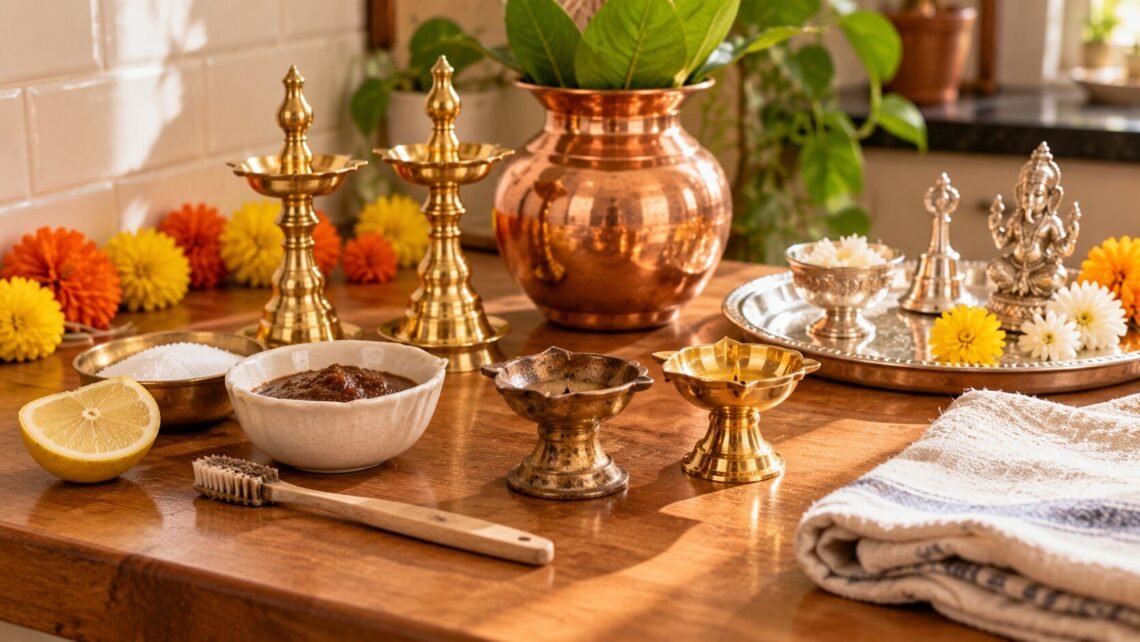
Brass diyas, a copper kalash, a silver plate for the aarti: these come out for Lakshmi Puja in most homes, and many of them have been in the family for years. Cleaning them is part of every Diwali, and so is the occasional mistake, like scrubbing the shine off a lacquered lamp or wearing through the silver on a plated plate.
The fix is simple. Work out what each piece is made of before you choose a method. This guide walks through that check, then the methods that suit brass, copper and silver.
It covers session nine of our room-by-room Diwali cleaning checklist, and the puja corner step in the final week of our Diwali preparation checklist.
Step 1: Check what you are cleaning
Solid or plated?
A fridge magnet is the quickest test. Solid brass is not magnetic, so if a magnet sticks, the piece is brass plating over another metal (Hemswell Antique Centres). Plated pieces need gentle cleaning only, because harsh methods can remove the thin top layer.
For silver, look for a hallmark or purity stamp. The Canadian Conservation Institute warns that any method of tarnish removal can damage silver-plated objects, and that the ammonia in many commercial polishes can attack the copper base underneath (Canadian Conservation Institute). If you are unsure whether a piece is solid silver, use only a soft polishing cloth.
Lacquered?
Some brass is coated with a clear lacquer to stop it tarnishing. A piece that has stayed bright for years without polishing is probably lacquered. Coated brass should be washed with warm soapy water and a soft cloth only; acidic or bicarbonate cleaners can damage the coating (Hemswell Antique Centres).
Old or valuable?
For antique or heirloom pieces, a dark patina is often part of their character and value. Collectors generally prefer it left alone (Hemswell Antique Centres). Wipe these with a soft dry cloth and leave the deep cleaning to a professional.
Painted, stone-set or hollow?
Idols with painted details, set stones or hollow sealed parts should not be soaked. Water can loosen paint and settings and can get trapped inside hollow pieces. Wipe them with a damp cloth and dry them straight away.
Step 2: Remove oil and wax first
Diyas and aarti lamps carry a sticky layer of old oil, ghee and soot. Remove this before you tackle tarnish, or you will just be scrubbing grease around.
- Soak the diyas in hot water with dish soap for 30 minutes to an hour.
- Scrub with a soft brush or an old toothbrush, paying attention to the wick channel.
- Rinse and check. Repeat the soak if the residue is still sticky.
For wax drips, put the item in the freezer for an hour. Hardened wax often lifts off in pieces with a plastic spatula.
Step 3: Clean brass and copper
These traditional methods use acids from the kitchen, which dissolve the dull tarnish on brass and copper. Use them on solid, unlacquered pieces only.
Tamarind. Soak a lump of tamarind in warm water, squeeze out the pulp, and rub it over the item with a cloth. Leave it for ten minutes on heavier tarnish, then scrub gently and rinse.
Lemon and salt. Sprinkle salt on half a lemon and rub it over the surface. This works quickly on copper kalash and lotas.
Ritha or a mild soap. For pieces that are only dusty or lightly dull, a soak in ritha water or mild dish soap is enough.
After any of these:
- Rinse thoroughly with clean water so no acid is left on the metal.
- Dry immediately with a soft cotton cloth. Water spots and leftover acid cause new marks.
- Buff with a dry cloth for shine.
Use an old toothbrush for engraved areas, and avoid steel wool or harsh scouring powder, which scratch the surface.
Step 4: Clean silver
Silver tarnishes when it reacts with sulphur in the air, which turns it yellow, then brown, then black.
Light tarnish: a polishing cloth
A silver polishing cloth handles light tarnish and is the gentlest option, which makes it the right choice for plated pieces and items you are unsure about (Canadian Conservation Institute).
Heavier tarnish: the aluminium foil method
This popular home method uses a chemical reaction to move the tarnish off the silver instead of rubbing it away. The Canadian Conservation Institute describes it using washing soda (sodium carbonate).
- Line a plastic or glass tub with aluminium foil, shiny side up.
- Add hot water and a few spoons of washing soda and stir to dissolve.
- Place the silver items in the tub so each touches the foil.
- Leave them for a few minutes, until the tarnish fades.
- Remove, rinse well, and dry with a soft cloth. Finish with a polishing cloth.
The Institute notes some drawbacks worth knowing: the method can leave a dull film that needs a gentle polish afterwards, treated pieces may tarnish faster, and sealed hollow objects should not be put in water (Canadian Conservation Institute). Skip it for plated pieces and heirlooms.
Dips and polishes
Commercial silver dips work fast but can over-clean and should be used with ventilation and rubber gloves. Polishes are mildly abrasive. The Canadian Conservation Institute advises avoiding general multi-purpose metal polishes on silver, as they remove more of the metal (Canadian Conservation Institute).
Never combine a commercial cleaner with homemade ones. If a product contains bleach or ammonia, mixing it with vinegar or other cleaners can release toxic gases (Health Canada).
Which method for which item
| Item | Method |
|---|---|
| Solid brass diya with oil residue | Hot soapy soak, then tamarind or lemon and salt |
| Copper kalash or lota | Lemon and salt, rinse, dry immediately |
| Lacquered brass | Warm soapy water and a soft cloth only |
| Brass-plated item | Mild soap and water; no acids |
| Antique or heirloom brass | Dry cloth only; ask a professional for more |
| Solid silver plate or bowl, light tarnish | Polishing cloth |
| Solid silver, heavy tarnish | Aluminium foil and washing soda, then polishing cloth |
| Silver-plated item | Polishing cloth only |
| Painted or stone-set idol | Damp cloth, dry immediately; no soaking |
Keeping them bright after Diwali
Fingerprints leave marks on silver, so the Canadian Conservation Institute recommends handling it with clean cotton gloves. For storage, it suggests wrapping each piece in acid-free tissue, sealing it in a polyethylene bag, and adding silica gel to keep the air dry (Canadian Conservation Institute). For brass and copper, a quick wipe with a dry cloth after each puja and storage in a dry cupboard slow the tarnish down.
If the puja shelf itself needs a rethink, our puja room organisation ideas include storage for diyas, thalis and incense. After the festival, diyas need another oil-and-wax clean, which we cover in our post-Diwali cleaning guide.
Frequently asked questions
How do I clean a black brass diya?
Soak it in hot soapy water to remove oil and soot, scrub with a soft brush, then use tamarind pulp or lemon and salt on the remaining tarnish. Rinse well and dry immediately.
Can I use the aluminium foil method on silver-plated items?
It is safer not to. Any tarnish removal can damage plating; use a soft silver polishing cloth instead.
Why does my brass turn dark again so quickly?
Moisture and leftover acid speed up tarnish. Rinse well after cleaning, dry completely, and store in a dry place.
Should I polish an antique brass idol?
Usually not. The patina is part of an antique’s character and value. Wipe it with a dry cloth and consult a professional if it needs more.
Sources
- Canadian Conservation Institute, Silver: care and tarnish removal (CCI Notes 9/7)
- Hemswell Antique Centres, How to clean antique brass lighting
- Health Canada, Reduce your risk from toxic gases: never mix bleach with other cleaning products