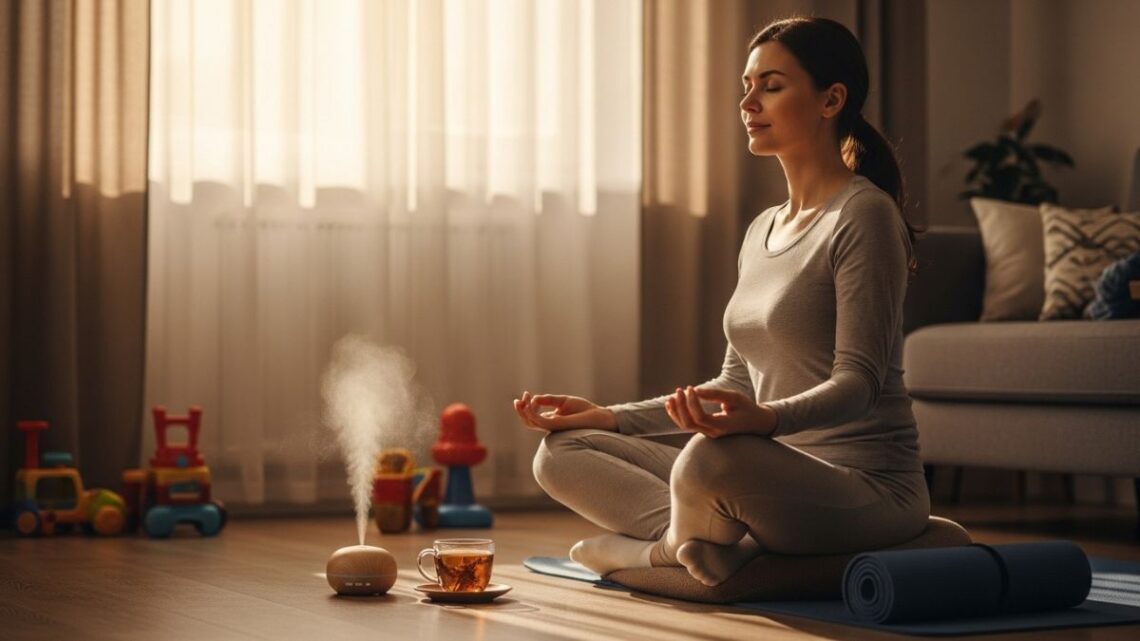
Meditation for Busy Moms: Simple Practices That Fit Into a Real Day
Disclaimer: This article may contain affiliate links. If you purchase through these links, I may earn a small commission as an Amazon Associate—at no additional cost to you.
Meditation can sound unrealistic when your day already starts with breakfast, school preparations, laundry, messages, work, and a long list of things that somehow still need to be done.
You may not have 30 quiet minutes. You may not even have 10.
That’s okay.
For a busy mom, meditation can be as simple as spending a few minutes paying attention to your breathing before the day begins, noticing your surroundings while drinking your morning chai, or doing a short body scan before bed.
The goal isn’t to become perfectly calm or to add another task to your schedule. It’s to create a small pause between everything that happens and how you respond to it.
Research suggests that mindfulness and meditation may help reduce symptoms associated with stress and anxiety, although the effects vary from person to person and meditation should not be treated as a replacement for professional care when someone is struggling with a mental-health condition.
You don’t need an hour to start
One of the biggest problems with meditation advice for busy parents is that it can make the practice sound like another commitment.
- A quiet room.
- A dedicated cushion.
- A 20-minute session.
- No interruptions.
- That’s not how most family homes work.
- Instead, start with the time you actually have.
If you have two minutes, use two minutes. If you have five, use five. If your child interrupts you after 90 seconds, that doesn’t mean the attempt was wasted.
A useful way to think about meditation is not as a separate activity that must always happen at a particular time, but as a practice you can fit into parts of your existing routine.
For example:
- Before getting out of bed
- After dropping children at school
- While waiting for water to boil
- During a quiet cup of tea
- Before starting work
- After putting the children to bed
- While sitting in the car before going inside
- During a short walk
- Before going to sleep
The best time is the one you can realistically repeat.
Five meditation practices that work with a busy schedule
Rather than trying ten different techniques at once, start with one that matches the part of your day that is easiest to protect.
1. The two-minute breathing pause
This is probably the simplest place to begin.
Sit comfortably or remain standing. Let your shoulders relax and pay attention to your normal breathing.
You don’t need to force deep breaths or follow a complicated counting pattern.
For the next two minutes:
- Notice the sensation of breathing.
- Pay attention to the air moving in and out.
- When your mind moves to your to-do list, notice that it happened.
- Bring your attention back to your breathing.
- Repeat until the two minutes are over.
Your mind will probably wander. That’s normal.
The practice isn’t about stopping thoughts. It’s about noticing when your attention has wandered and gently bringing it back.
Good time to try it: Before opening your phone in the morning, after school drop-off, or before starting work.
Why it can be useful: It gives you a short transition between one part of the day and the next without requiring any equipment.
2. Turn your morning chai into a mindful pause
If you already have five minutes for tea or coffee, you don’t necessarily need to create another five-minute slot for meditation.
Make those minutes more intentional.
Instead of drinking your chai while checking WhatsApp, answering messages and mentally planning lunch, sit down and focus on the drink itself.
Notice:
- The warmth of the cup
- The smell of the tea or coffee
- The first sip
- The temperature
- The taste
- The sensation as you swallow
When your thoughts move toward the next task, come back to what you are doing.
You don’t need silence. You don’t need special music. You simply need to do one thing at a time for a few minutes.
Good time to try it: During your first uninterrupted cup of chai or coffee.
One important limitation: If your morning is too rushed for this to feel relaxing, don’t force it. A two-minute breathing pause at another time may be more realistic.
3. A short body scan before bed
A body scan is useful when your mind is still running through the day’s unfinished tasks.
Lie down or sit comfortably.
Start by noticing your feet. Then slowly move your attention upward through your legs, stomach, chest, shoulders, arms, neck and face.
You don’t need to make anything happen.
Simply notice:
- Where your body feels comfortable
- Where it feels tense
- Whether your jaw is clenched
- Whether your shoulders are raised
- Whether you’re holding your breath
If you notice tension, you don’t have to fix every part of your body. Just acknowledge the sensation and continue.
This can become a simple transition from an active day toward bedtime.
Good time to try it: When the children are finally asleep and you’re ready to wind down.
If you keep falling asleep: That’s not a meditation failure. You may simply be tired. If your goal is relaxation before sleep, falling asleep may be exactly what your body needs.
4. Mindful walking during an ordinary routine
You don’t need a scenic park or a dedicated meditation walk.
You can practice while walking around your home, walking to pick up your child, or taking a short walk outside.
For a few minutes, bring your attention to the physical act of walking.
Notice:
- Your feet touching the ground
- The movement of your legs
- Your breathing
- The movement of your arms
- Sounds around you
- The feeling of the air on your skin
When your mind starts planning dinner or replaying a conversation, notice it and return your attention to walking.
The important part is not walking slowly or looking unusually peaceful.
It’s simply paying attention to something you are already doing.
5. A simple self-compassion pause
Mothers can spend a surprising amount of mental energy reviewing what they didn’t get done.
- Maybe the house isn’t clean.
- Maybe you lost patience with the children.
- Maybe you didn’t finish your work.
- Maybe you didn’t get any time for yourself.
- A short self-compassion practice can create a pause before that self-criticism takes over.
- Sit comfortably and take a few normal breaths.
Then silently acknowledge what you’re experiencing:
“Today was difficult.”
Follow it with something realistic rather than overly positive:
“I don’t have to handle everything perfectly.”
And then:
“I can take the next small step.”
This isn’t about pretending that everything is fine. It’s about responding to yourself with the same understanding you might offer a friend who had a difficult day.
Which practice should you choose?
You don’t need to learn all five.
Choose according to the problem you’re trying to solve.
| If your day usually feels… | Start with… |
| Mentally scattered in the morning | Two-minute breathing |
| Too rushed to create extra time | Mindful chai or coffee |
| Difficult to switch off at night | Body scan |
| Full of household movement | Mindful walking |
| Full of self-criticism | Self-compassion pause |
If one practice feels awkward, try another. Meditation isn’t supposed to become another source of guilt.
A realistic five-minute routine
If you want one routine to follow for the next week, keep it simple.
Minute 1 — Settle
Sit on a chair, the edge of your bed, or another comfortable surface.
Put your phone aside.
Take a few normal breaths and notice how your body feels.
Minutes 2–3 — Follow your breathing
Pay attention to each breath.
You don’t need to make the breathing deeper or slower unless that feels comfortable.
When your mind wanders, notice it and return your attention to the breath.
Minute 4 — Notice your body
Check your shoulders, jaw, face and hands.
Are you holding tension anywhere?
You don’t have to fix it. Simply notice.
Minute 5 — Decide what comes next
Before getting up, ask yourself:
“What is the one thing I want to carry into the next part of my day?”
It might be patience.
It might be focus.
It might simply be getting through the next task without rushing.
Then finish the practice and continue with your day.
That’s enough
What if your children interrupt you?
They probably will.
And that’s one reason a short practice is more realistic than building your routine around perfect silence.
If your child calls you halfway through meditation, attend to them.
If you need to stop, stop.
You haven’t failed.
Over time, you may find a more predictable window—perhaps after school drop-off, during a child’s nap, or after bedtime—but there is no reason to wait for that perfect window before starting.
You can also teach older children a simple one-minute breathing exercise and occasionally practice together. That changes meditation from something you have to protect from your family into something that can occasionally become part of family life.
What you actually need for meditation
Very little.
You can meditate:
- On a chair
- On your bed
- On the floor
- While standing
- While walking
A cushion or yoga mat can make sitting more comfortable, but neither is required.
The same applies to meditation apps, candles, essential oils, singing bowls and other accessories.
They may make a routine more enjoyable for some people, but they aren’t what makes meditation meditation.
This distinction matters because buying equipment can easily turn a two-minute practice into another project.
If you already have a comfortable place to sit, start there
When meditation isn’t enough
Meditation can be a useful self-care practice, but it shouldn’t be presented as a cure for burnout, depression, anxiety disorders or chronic sleep problems.
Research on mindfulness and meditation is promising for some stress and anxiety outcomes, but the evidence varies depending on the practice, the person and the condition being studied.
If you are constantly exhausted, unable to function normally, experiencing persistent anxiety or low mood, having thoughts of harming yourself, or struggling to cope with everyday life, meditation should not be your only response. Consider speaking with a qualified healthcare or mental-health professional.
And if meditation itself makes you feel more anxious or uncomfortable, stop and reconsider whether the particular practice is right for you. Meditation is generally considered low-risk, but negative experiences have been reported in some studies.
You don’t have to become a “meditating mom”
You don’t need a meditation streak.
You don’t need a special corner of the house.
You don’t need to wake up an hour earlier.
And you certainly don’t need to feel guilty when a five-minute session turns into a two-minute session because someone needs you.
Start with something small enough that you can actually repeat.
- Two quiet minutes before your phone.
- A mindful cup of chai.
- A few breaths after school drop-off.
- A short body scan before sleep.
- The practice is small. That’s the point.
When life is already full, the most useful form of self-care may not be another thing you have to accomplish. It may simply be a short moment when you stop, notice where you are, and give yourself permission to breathe.
Frequently asked questions
Can I meditate if I only have two or five minutes?
Yes. A short practice can be a practical starting point, especially when a longer session would be difficult to maintain. The important thing is to choose a duration that fits your actual routine rather than setting an unrealistic target.
What is the best time for a busy mom to meditate?
There isn’t one universally best time. Try a point in your day that is relatively predictable, such as after school drop-off, before work, during a quiet tea break or after the children go to bed. If that window regularly gets interrupted, choose another one.
Can I meditate while my children are awake?
Yes. You can use a short breathing exercise while children are playing nearby or practice a simple mindfulness exercise together. But don’t expect the same quiet environment you might have during a formal meditation session.
Do I need a meditation app?
No. A guided app can be useful if you prefer someone to lead the practice, but basic breathing, body-awareness and mindfulness exercises can be done without an app or subscription.
Is meditation a treatment for burnout?
No. Meditation may be useful as one part of managing stress, but it does not remove the causes of burnout and should not be presented as a treatment by itself. If exhaustion, low mood or anxiety is persistent or affecting daily functioning, professional support may be appropriate.
What should I do if I can’t stop my thoughts while meditating?
You don’t need to stop them. Noticing that your mind has wandered and gently returning your attention to your chosen focus is part of the practice.
A note for HomeSoul readers
If you try one of these practices, pay attention to what actually fits your life.
Maybe two minutes before breakfast works better than ten minutes before bed. Maybe mindful tea feels natural while sitting quietly feels impossible. Maybe walking works better than sitting.
There isn’t a prize for choosing the most complicated technique.
Choose the one you can realistically return to.