Natural Cleaning Products You Can Make at Home in India
Disclaimer: This article may contain affiliate links. If you purchase through these links, I may earn a small commission as an Amazon Associate—at no additional cost to you.
Quick Answer
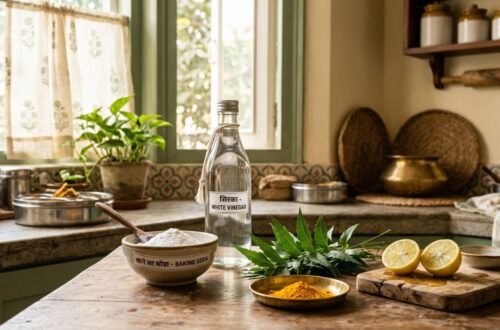
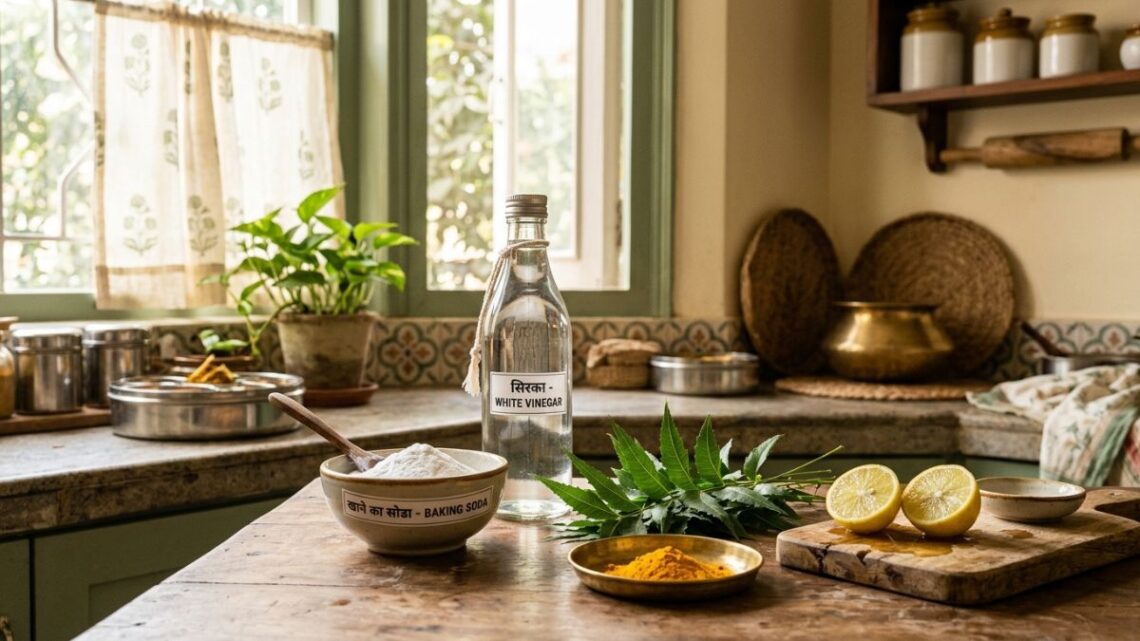
You can make effective natural cleaning products at home using five ingredients found in every Indian kitchen: white vinegar, baking soda, neem leaves or neem oil, haldi (turmeric), and lemon. These ingredients clean, disinfect, and deodorise surfaces without the harsh chemicals found in commercial cleaners.
Most commercial cleaning products sold in India contain synthetic surfactants, chlorine compounds, and artificial fragrances that linger on kitchen counters, bathroom floors, and the hands that scrub them daily. For families with young children, pregnant women, or anyone with asthma or skin sensitivities, these chemicals are not a neutral choice. The good news is that your kitchen already contains everything you need to make cleaning products that are just as effective and in some cases more so than the bottled alternatives. This guide covers eight recipes using ingredients that have been used in Indian homes for generations.
Why Indian Kitchen Ingredients Are Ideal for Natural Cleaning
Indian cooking and Ayurvedic practice have always used neem, haldi, lemon, and vinegar for their antibacterial and antifungal properties. Modern research confirms what generations of Indian homemakers knew intuitively: neem contains nimbidin and nimbin compounds that are active against a broad range of bacteria and fungi. Turmeric contains curcumin, which has demonstrated antimicrobial properties. White vinegar’s acidity (typically 4 to 8 per cent acetic acid) kills many common household bacteria and dissolves mineral deposits. Baking soda is a gentle abrasive and deodoriser. Together, these four ingredients handle the majority of household cleaning tasks.
8 Homemade Natural Cleaning Product Recipes
All-Purpose Kitchen Counter Spray
This is the recipe you will use most often. It cuts through cooking grease, disinfects after raw meat or fish prep, and leaves no chemical residue on surfaces where food is prepared.
| All-Purpose Kitchen Counter Spray | |
| Ingredients • 1 cup white vinegar • 1 cup water • 20 drops neem oil (or a strong neem leaf decoction) • 10 drops lemon essential oil (optional) | Method 1. Combine all ingredients in a clean 500 ml spray bottle. 2. Shake before each use. 3. Spray on the surface, leave for 30 seconds, wipe with a damp cloth. 4. Store away from direct sunlight. Use within 4 weeks. |
Important: Do not use vinegar-based sprays on marble or granite surfaces, as the acid can dull the finish over time. Use the baking soda paste (Recipe 2) instead.
Baking Soda Paste for Sinks and Tiles
This gentle abrasive paste removes stains, soap scum, and hard water deposits from bathroom tiles, kitchen sinks, and stainless steel without scratching. It is especially effective in areas with hard water, which is common across most of India.
| Baking Soda Scrub Paste | |
| Ingredients • 3 tablespoons baking soda • 1 tablespoon liquid dish soap • 5–10 drops lemon juice | Method 1. Mix into a thick paste. 2. Apply with a damp sponge or old toothbrush. 3. Scrub the surface in circular motions. 4. Rinse thoroughly with water. Use immediately does not store well. |
Haldi and Neem Floor Cleaner
In Indian homes, the floor cleaner is used multiple times a day. Most commercial floor cleaners contain pine oil, synthetic fragrances, and bleaching agents. This neem and haldi solution disinfects effectively and leaves a light, natural scent.
| Haldi-Neem Floor Cleaner | |
| Ingredients • 2 litres of warm water • 2 tablespoons neem oil or neem leaf decoction • 1/2 teaspoon haldi powder • 2 tablespoons white vinegar • 5 drops eucalyptus or tea tree oil (optional) | Method 1. Add all ingredients to a bucket of warm water. 2. Stir well before mopping. 3. Use a standard wet mop as usual. 4. No rinsing required, allow to air dry. |
Note: Haldi will leave a very faint yellow tint on light-coloured grout over repeated use. If your floors have white grout, use the plain neem and vinegar version without haldi.
Lemon and Salt Brass and Copper Cleaner
Brass puja items, copper vessels, and stainless steel utensils are present in almost every Indian home. Lemon and salt together dissolve tarnish and oxidation naturally. This is a traditional Indian cleaning method that has been in use for centuries.
| Brass and Copper Polish | |
| Ingredients • Half a lemon • 1 teaspoon coarse salt | Method 1. Dip the cut lemon face into the salt. 2. Rub directly onto the brass or copper surface. 3. Leave for 2–3 minutes. 4. Rinse with warm water and dry immediately with a soft cloth. |
White Vinegar Bathroom Descaler
Hard water deposits the white, chalky residue around taps, showerheads, and toilet rims are a persistent problem across India. White vinegar dissolves calcium and magnesium deposits without scrubbing.
| Bathroom Descaler | |
| Ingredients • Undiluted white vinegar • Paper towels or old cloth | Method 1. Soak paper towels in undiluted white vinegar. 2. Press them onto the affected surface (taps, tiles, toilet rim). 3. Leave for 1–2 hours, or overnight for heavy deposits. 4. Remove towels, scrub lightly, and rinse with water. |
Neem Leaf Decoction for Disinfecting
If you have access to fresh neem leaves available in most Indian neighbourhoods, markets, and gardens, a strong neem decoction is one of the most powerful natural disinfectants available. It is particularly effective for sanitising baby toys, kitchen cutting boards, and surfaces in the bathroom.
| Neem Leaf Decoction | |
| Ingredients • A large handful of fresh neem leaves • 2 litres of water | Method 1. Boil neem leaves in water for 15–20 minutes until the water turns deep green. 2. Strain and allow to cool. 3. Use diluted 1:1 with water as a surface spray, or use full strength on high-touch surfaces. 4. Store in a glass container for up to 3 days. |
Baking Soda and Vinegar Drain Cleaner
Slow drains are a common problem in Indian kitchens due to the oils, spices, and food particles that pass through them. This combination creates a fizzing reaction that breaks up blockages without the harsh lye found in chemical drain cleaners.
| Natural Drain Cleaner | |
| Ingredients • 4 tablespoons baking soda • 1 cup white vinegar • 1 kettle of boiling water | Method 1. Pour baking soda down the drain. 2. Follow immediately with white vinegar. Allow to fizz for 5–10 minutes. 3. Flush with the full kettle of boiling water. 4. Repeat weekly as a preventive measure. |
Lemon and Baking Soda Refrigerator Deodoriser
Refrigerators in Indian homes store strongly scented items, such as mustard oil, pickles, fresh coriander, and fish and odour transfer between foods is a common complaint. This simple deodoriser absorbs and neutralises smells naturally.
| Refrigerator Deodoriser | |
| Ingredients • 1 lemon, halved • 3 tablespoons baking soda | Method 1. Place baking soda in a small open container inside the fridge. 2. Place the lemon halves face-up next to it. 3. Replace the baking soda every 30 days. 4. Replace the lemon every 2 weeks. |
Checklist: What to Stock for Natural Cleaning
- White vinegar (buy in 1-litre bottles for economy)
- Baking soda (available at any grocery store or pharmacy)
- Neem oil or fresh neem leaves
- Haldi (turmeric) powder use grocery stock
- Buy lemons weekly with your regular grocery run
- Coarse salt for scrubbing and polishing
- Spray bottles (500 ml, at least two)
- Small open containers for fridge deodorisers
When Homemade Products Are and Are Not Enough
Homemade natural cleaners handle the vast majority of everyday household cleaning tasks. However, there are specific situations where a commercial or stronger product is more appropriate:
- Severe mould growth on walls or ceilings: requires a commercial anti-mould product or professional treatment
- Toilet bowl stains from heavy iron content in water: may require a commercial iron stain remover
- Pest infestations: require appropriate pest control products
- Post-illness deep sanitisation: use a hospital-grade disinfectant for surfaces in a sickroom
For everything else, daily kitchen cleaning, bathroom maintenance, floor mopping, and odour control, the eight recipes above are entirely sufficient.
Final Thoughts
Switching to homemade natural cleaning products is not a sacrifice; it is an upgrade. Your home gets cleaned just as effectively, your family’s exposure to synthetic chemicals decreases significantly, and your cleaning supplies cost a fraction of what branded products do. The eight recipes in this guide will handle your daily kitchen, bathroom, and floor cleaning for a full month for under ₹300 in ingredients.
Start with just one recipe this week, the all-purpose kitchen spray or the floor cleaner, and see how it works in your home. You will likely not go back. For more natural living ideas, read our guide on why switching to organic products saves money.
Frequently Asked Questions
Are homemade cleaning products as effective as commercial cleaners?
Yes, for most everyday cleaning tasks. Vinegar kills many common bacteria and dissolves mineral deposits. Neem has proven antibacterial and antifungal properties. Baking soda is an effective, gentle abrasive and deodoriser. For heavy mould or post-illness sanitisation, a commercial product may be more appropriate.
Is it safe to mix vinegar and baking soda for cleaning?
Yes, but the mixture foams vigorously when combined and the fizzing action is what does the cleaning work. They are safe to mix and do not create harmful gases. Mix them just before use, a pre-mixed solution loses its effectiveness quickly as the reaction subsides.
Can I use haldi to clean without staining surfaces?
Haldi can leave a faint yellow tint on white grout and very light-coloured surfaces when used repeatedly. Use it on dark tile floors, stainless steel, and brass without concern. For white or cream tiles, use a neem and vinegar solution without haldi.
Where can I buy neem oil in India?
Neem oil is widely available at grocery stores, pharmacies, and on Amazon.in. Buy cold-pressed neem oil for cleaning use. It is typically sold in 100 ml or 200 ml bottles for ₹100 to ₹250. Fresh neem leaves from local trees or markets are equally effective and free.
How long can homemade cleaning products be stored?
Vinegar-based sprays last 2 to 4 weeks in a spray bottle. Neem decoctions last 2 to 3 days at room temperature or up to a week in the refrigerator. The baking soda paste and lemon-salt polish should be made fresh as needed and not stored.
Are these cleaning products safe around children and pets?
Yes, all ingredients in this guide are food-grade or food-adjacent. Vinegar, lemon, and baking soda are entirely safe for surfaces that children and pets touch. Neem oil in concentrated form should be kept away from very young infants, but diluted in cleaning solutions as described here, it is safe for general household use.
What is the cheapest natural cleaning product to make at home?
The baking soda and vinegar drain cleaner is the most economical, as baking soda costs around ₹50 per box, and white vinegar costs around ₹80 per litre, making it far cheaper than commercial drain cleaners that cost ₹200 to ₹400 per bottle.