Best Wardrobe Organisation Ideas for Indian Homes
Disclaimer: This article may contain affiliate links. If you purchase through these links, I may earn a small commission as an Amazon Associate—at no additional cost to you.
Quick Answer
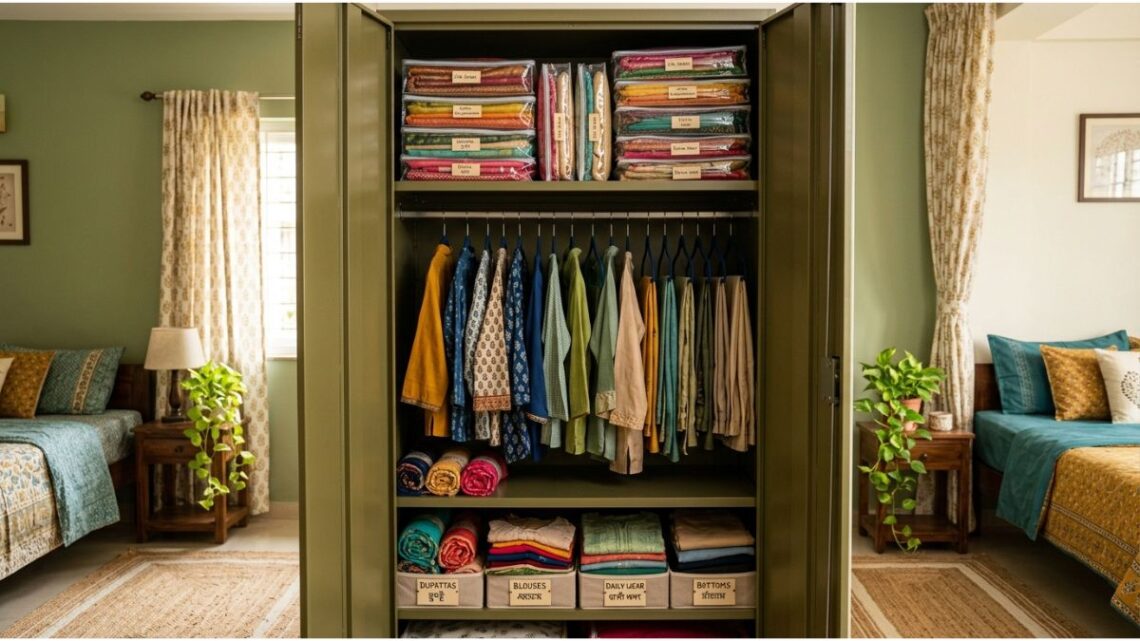
The smartest way to organise an Indian wardrobe is to divide your almirah by use: daily wear within easy reach, sarees folded on saree organisers, and off-season clothes stored up top. Add slim hangers, drawer dividers, and a few stackable boxes to nearly double your usable space.
If you have ever spent ten minutes hunting for a specific dupatta, or watched your freshly folded clothes collapse the moment you open the almirah door, you are not alone. In most Indian homes, wardrobes are doing the work of three — storing daily wear, festive outfits, seasonal bedding, and whatever else has no other home. The problem is rarely a lack of space. It is a lack of system. This guide covers 12 wardrobe organisation ideas that are practical, affordable, and built for the realities of Indian homes — small almirahs, monsoon humidity, sarees, and joint families included.
Why Most Indian Wardrobes Stay Messy
Most organisation advice online is designed for walk-in closets in Western homes. Indian almirahs and built-in wardrobes are typically smaller, more vertical, and shared between multiple family members. Sarees, salwar-kameez sets, and dupattas do not fold or hang the same way as western clothing. Without a system designed for these realities, clutter returns within days of tidying.
The fix is not buying a bigger wardrobe. It is giving every category of clothing its own zone and using the right accessories to hold that zone in place.
12 Wardrobe Organisation Ideas for Indian Homes
1. Sort by Zone, Not by Person
If your wardrobe stores multiple people’s clothes, resist the temptation to divide it “his side, her side.” Instead, divide by clothing category: one shelf for daily wear, one for formal clothes, one for ethnic wear, one for nightwear. This way, everyone in the family knows exactly where to look and where to return things after washing. Zone sorting is the single most effective change you can make — and it costs nothing.
2. Use Shelf Dividers for Folded Clothes
Folded clothes stacked high always topple sideways. Acrylic or wire shelf dividers create vertical compartments that keep stacks separate and upright. They work especially well for T-shirts, saree blouses, and folded dupattas. A set of four dividers for a single shelf costs between ₹200 and ₹400 on Amazon.in and makes an immediate visible difference. Best for: families with two or more members sharing a wardrobe.
3. Store Sarees in Individual Saree Bags
A saree folded inside another saree means both take twice as long to retrieve and identify. Zipper-style saree bags — the kind with a transparent window — let you see what is inside without unfolding everything. Store each saree or lehenga in its own bag and stack the bags flat on a dedicated shelf. This system also protects silk and heavy fabrics from dust and monsoon humidity throughout the year. Look for non-woven fabric saree bags with a clear window on Amazon.in, available in sets of 6 or 12.
4. Add a Door-Back Organiser
The back of a wardrobe door is premium unused space. A fabric pocket organiser hung on the door can hold accessories, scarves, belts, sunglasses, small handbags, and all the items that typically end up scattered on the main shelf. Organisers with clear pockets let you see everything at a glance. They are available for ₹300 to ₹600 on Amazon.in. Best for: accessories, dupatta pins, hair accessories, and everyday-use items.
5. Use Vacuum Storage Bags for Seasonal Clothes
A lot of wardrobe space goes to clothes worn only two or three months a year — winter woolens, heavy wedding outfits, or monsoon-specific rain gear. Vacuum storage bags compress these items to roughly a quarter of their original volume. Store the bags under the bed or on the topmost shelf and free up your main wardrobe space for daily-wear clothing. One important caution: do not vacuum-pack silk, beaded fabrics, or heavily embroidered items, as the compression can damage the finish over time.
6. Try the Vertical Fold Method for Casuals
Instead of stacking T-shirts horizontally in a pile — where items at the bottom never get used — fold each one into a small rectangle and store them vertically side by side, like files in a cabinet drawer. You can see and access every item without disturbing the rest of the pile. This method works brilliantly in drawers and on open shelves, and is the core KonMari technique that genuinely translates to Indian almirah storage.
7. Hang a Soft Organiser for Dupattas and Chunnis
Dupattas are one of the hardest things to organise — they are too long to fold neatly, too light to hang evenly, and there are typically many of them. A hanging multi-pocket organiser that attaches to the wardrobe rod stores each dupatta separately and prevents tangling. Look for a hanging organiser with 6 to 10 compartments for under ₹500 on Amazon.in.
8. Install a Second Hanging Rod for Short Items
If your wardrobe has one full-length hanging rod, the bottom half of the space below shorter items — shirts, kurtas, jackets — is being wasted. Installing a second rod below the first doubles your hanging capacity for short clothes. Clip-on double-hang rods are available for ₹400 to ₹800 and require no drilling. Best for: wardrobes that need to hang both long garments like sarees and gowns alongside shorter items.
9. Switch to Slim Velvet Hangers
Standard plastic hangers are 2 to 3 centimetres thick. Slim velvet hangers are just 0.5 centimetres thick, and clothes stay on them without slipping — the velvet surface grips fabric firmly. Switching from plastic to velvet hangers on a standard rod can add 40 to 50 percent more hanging capacity. They also make a wardrobe look immediately neater. Available in sets of 30 or 50 for ₹300 to ₹600.
10. Label Shelves and Sections
Labelling may sound excessive, but in a shared family wardrobe it is one of the most effective ways to maintain any system over time. Sticky labels on shelf edges — “Nightwear,” “Office,” “Kids: School” — remove the guesswork and mean everyone in the family returns things to the right place. Peel-and-stick chalk labels or printed label stickers look neat and cost very little.
11. Dedicate a Drawer or Box to Accessories
Jewellery, watches, hair ties, belts, and scarves often end up scattered across shelves because there is no designated spot for them. A small divided storage box or multi-compartment jewellery tray placed in a single drawer gives every accessory a fixed home. Grid organiser boxes for ₹200 to ₹500 fit inside most almirah drawers and immediately reduce small-item clutter.
12. Do a Seasonal Audit Every Six Months
No organisation system stays perfect without maintenance. Every six months — at the start of summer and the start of winter — do a 30-minute wardrobe audit. Pull everything out, remove anything unworn in the past year, and re-sort before putting it back. Donating or selling unworn clothes is the single biggest reducer of wardrobe clutter in Indian homes, and the starting point for any long-term system.
Wardrobe Organisation Checklist
- Sort clothes into zones: daily wear, ethnic, formal, nightwear, seasonal
- Install shelf dividers to prevent folded piles from collapsing
- Store each saree or lehenga in its own transparent bag
- Add a door-back pocket organiser for accessories
- Vacuum-pack seasonal clothes to free up prime shelf space
- Switch to slim velvet hangers to add 40–50% more hanging capacity
- Store dupattas in a hanging multi-pocket organiser
- Label shelves so the whole family can maintain the system
- Audit the wardrobe every six months and remove unworn items
- Add a second hanging rod for short garments like shirts and kurtas
What to Buy First: A Prioritised Shopping List
You do not need to buy everything at once. If you are starting from scratch, purchase in this order for the greatest impact:
- Saree bags (set of 6 or 12) — the highest-impact purchase for most Indian wardrobes
- Slim velvet hangers (set of 30) — immediately creates more hanging space
- Shelf dividers (set of 4) — stops folded stacks from collapsing
- Door-back pocket organiser — clears accessories off shelves
- Vacuum storage bags (set of 4 to 6) — frees the most space by compressing seasonal items
All five are available on Amazon.in for between ₹200 and ₹800 per item. A full wardrobe organisation upgrade is achievable for under ₹3,000 total.
Special Considerations for Indian Wardrobes
Humidity and the Monsoon Season
During the monsoon, moisture inside a closed wardrobe causes musty smells and, in persistent cases, mild mildew on stored fabrics. Place two or three silica gel packets inside the wardrobe and replace them every three months. Always ensure clothes are completely dry before storing — hand-washed items should be fully air-dried first.
Wardrobes in Joint Families
In joint families where one wardrobe stores clothing for four to six people, the zone system becomes essential rather than optional. Assign each person a fixed shelf and a fixed rod section. Colour-coded hangers or labels help younger children identify their own section and learn the habit of returning clothes to the right place.
Small Almirahs
If your almirah is under three feet wide, focus entirely on vertical space. Add an extra shelf where possible, use both door backs fully, and move out-of-season items to under-bed storage boxes. The goal is to let the almirah hold only the clothes you are actively wearing in the current season.
Frequently Asked Questions
How do I organise a small Indian almirah?
Remove everything first and sort into keep, donate, and seasonal piles. Use shelf dividers, slim velvet hangers, and door-back pockets to maximise every inch. Move seasonal items to vacuum bags stored under the bed to free up main shelf space for daily-wear clothes.
What is the best way to store sarees in a wardrobe?
Store each saree flat in its own non-woven fabric bag with a transparent window, then stack the bags on a dedicated shelf. This protects fabric, prevents tangling, and lets you identify each saree without unfolding anything.
How do I keep a wardrobe organised over the long term?
The most effective approach is a zone system combined with a twice-yearly audit. When every category of clothing has a fixed zone and you clear out unworn items every six months, the wardrobe stays manageable with just five minutes of daily tidying.
Which wardrobe accessories are worth buying in India?
Saree bags, slim velvet hangers, shelf dividers, and door-back pocket organisers give the best return on investment. All four together cost under ₹2,000 on Amazon.in and make an immediate, visible difference.
How do I protect clothes from monsoon humidity in a wardrobe?
Place two or three silica gel packets inside the wardrobe and replace them every three months. Never store damp clothes inside, and leave the wardrobe door open for 30 minutes each morning if possible to allow air circulation.
Can a shared family wardrobe stay organised?
Yes — the key is dividing by clothing category zone, not by person. Assign each family member a fixed shelf and rod section with a colour-coded label. This makes it clear where each person’s items belong and eliminates daily sorting confusion.
How often should I declutter my Indian wardrobe?
A full audit every six months — at the start of summer and at the start of winter — works well for most Indian homes. If your almirah is particularly small, a lighter monthly check prevents build-up before it becomes overwhelming.
Final Thoughts
A well-organised wardrobe is not a luxury — it is a daily time-saver. When you can find exactly what you need in under a minute, getting ready in the morning feels calmer and faster. Start with just one change today: sort your clothes into zones, or swap your plastic hangers for velvet ones. You do not need to overhaul everything at once. Small, consistent steps are what turn a chaotic almirah into a space that genuinely works for your family.
For more Indian home organisation ideas, explore our guides on how to organise a small closet and the best laundry accessories for Indian homes.