
Disclaimer: This article may contain affiliate links. If you purchase through these links, I may earn a small commission as an Amazon Associate—at no additional cost to you.
Rangoli was traditionally made with rice flour, and colour came from whatever the kitchen and garden had: turmeric, kumkum, crushed leaves and flower petals. You can still make a full set of colours this way in an afternoon, with ingredients most Indian kitchens already stock.
Home-made colours are softer than the bright synthetic powders sold in markets. They are also easier to sweep up, and they leave nothing in the drain that you would not put there anyway.
Why make your own
Bright coloured powders are often sold with little information on what is in them. A study of dry Holi colours sold in and around Kolkata found average lead levels in every colour tested above the US FDA’s reference limit for cosmetics, even though the products were marketed as herbal and non-toxic (Goswami and Mazumdar, Indian Journal of Clinical Biochemistry). That study covered Holi colours, not rangoli powders. Still, if children will be sitting on the floor with their hands in the colour, knowing exactly what went into it is reassuring.
What you need
- Base: rice flour is traditional and gives a good white. Cornflour works too.
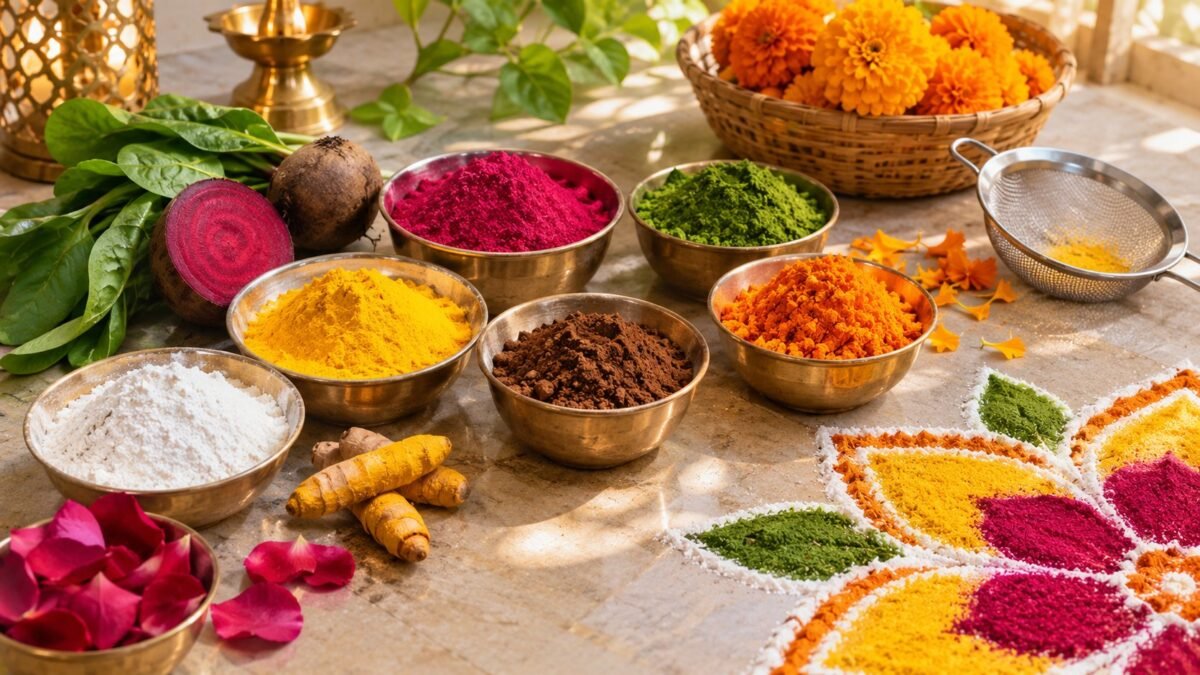
- Colours: turmeric, beetroot, spinach, coffee or tea, dried marigold and rose petals, and kumkum if you have a natural one.
- Equipment: a mixer or grinder, a sieve, plates or trays for drying, a muslin cloth, and clean, dry glass jars.
The basic method
There are two ways to colour the base, depending on the ingredient.
Dry mixing (for powders such as turmeric and coffee)
- Put a cup of rice flour in a bowl.
- Add the coloured powder a spoonful at a time and mix well with a dry spoon or your fingers.
- Keep adding until you like the shade. More powder gives a deeper colour.
- Sieve the mixture so the colour is even.
Wet mixing (for fresh vegetables)
- Grind the vegetable with a little water into a smooth paste, then strain it through muslin to get the coloured juice.
- Add rice flour to the juice and mix into a thick, crumbly dough.
- Spread it thinly on a plate and let it dry completely in the sun. This can take a day or longer depending on the weather (The Better India).
- Once it is fully dry, grind it back into powder and sieve it.
The powder must be completely dry before you store it. Any moisture left in it will turn it mouldy within days.
Colour by ingredient
| Colour | Ingredient | Method |
|---|---|---|
| White | Rice flour on its own | Use as it is |
| Yellow | Turmeric | Dry mix with rice flour |
| Orange | Dried marigold petals, or turmeric with a pinch of natural kumkum | Grind petals to powder, then dry mix |
| Pink to deep red | Beetroot | Wet mix: juice, rice flour, sun-dry, grind |
| Green | Spinach or other leafy greens | Wet mix: juice, rice flour, sun-dry, grind |
| Brown | Coffee or tea powder | Dry mix with rice flour |
| Rose pink | Dried rose petals | Grind petals to powder, then dry mix |
Beetroot gives the brightest colour. Spinach greens turn a little paler as they dry, so use a generous amount of juice.
Using flowers and grains directly
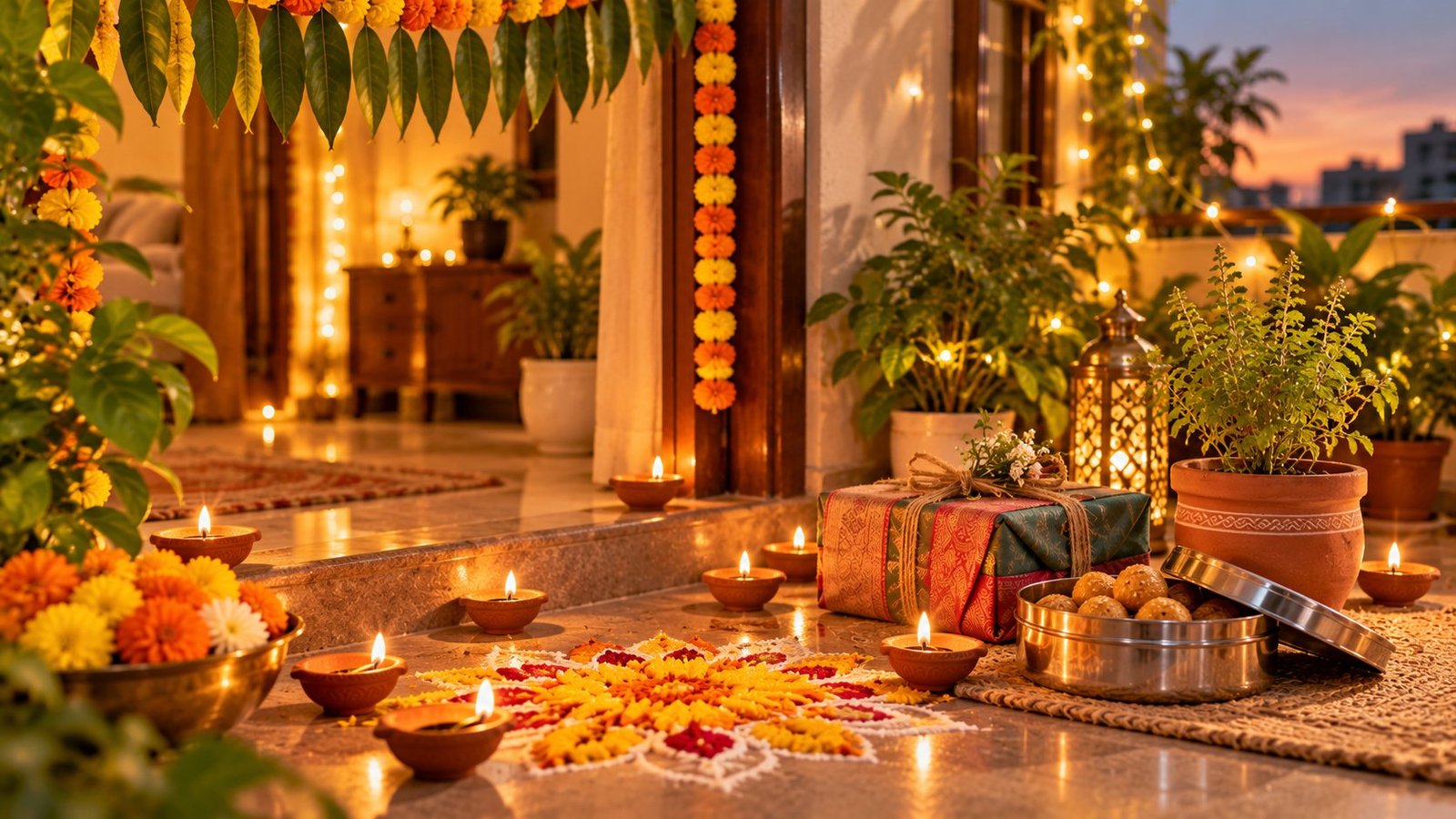
You do not have to turn everything into powder. Whole marigold and rose petals, mango leaves, rice grains and dals of different colours can fill a design directly. A flower rangoli looks especially good at the entrance and is easy to compost afterwards.
A simple approach is to draw the outline in white rice flour, then fill sections with petals and grains.
Storing the colours
- Store each colour in a separate, completely dry glass jar with a tight lid.
- Keep the jars in a cool, dry place away from the stove.
- Make the colours in the week before Diwali rather than weeks ahead, so they stay fresh.
- If a jar smells musty or shows spots, throw it away.
Making rangoli with children
Making colours is a good job for children in the days before Diwali: stirring, sieving and laying out trays to dry. Because the colours come from kitchen ingredients, you know what is in them, but they are still not meant to be eaten. Keep pets away from the trays while the colours dry. For more to do with children over the festival, see our Diwali activities for kids and our list of family activities at home.
Cleaning up
Natural colours sweep up easily, but turmeric and beetroot can stain light marble, grout and some tiles if they get wet.
- Test a small amount on a hidden corner of the floor first.
- Sweep or vacuum the rangoli dry before you mop.
- Compost what you sweep up, or put it in the wet-waste bin.
Our post-Diwali cleaning guide covers stubborn rangoli stains, along with wax and diya oil.
For where to put the rangoli and how to decorate around it, see our Diwali decoration ideas for small homes.
Rangoli usually goes down on Choti Diwali; our Diwali preparation checklist shows where it fits in the week. For more ways to keep the festival low-waste, see our eco-friendly Diwali ideas. Natural colour kits in small jars also make a good homemade gift; our list of natural Diwali gift ideas has more.
Frequently asked questions
How do I make rangoli colour at home?
Mix rice flour with turmeric, coffee or ground dried petals for quick colours. For beetroot and spinach, mix the juice with rice flour, sun-dry it completely and grind it back to powder.
Which flour is best for rangoli?
Rice flour is traditional and gives the cleanest white. Cornflour also works as a base for colours.
How long do homemade rangoli colours last?
Kept completely dry in airtight glass jars, they last through the festival. Make them in the week before Diwali and throw away any that smell musty.
Do natural rangoli colours stain the floor?
Turmeric and beetroot can stain light marble and grout if they get wet. Test a small spot first and sweep the rangoli up dry before mopping.
Sources
- Goswami K. and Mazumdar I., A study of the levels of some toxic substances present in dry Holi colours in Kolkata, India, Indian Journal of Clinical Biochemistry
- The Better India, How to prepare natural Holi colours at home from beetroot, spinach and turmeric