
Disclaimer: This article may contain affiliate links. If you purchase through these links, I may earn a small commission as an Amazon Associate—at no additional cost to you.
Diwali produces a lot of waste in a few days: plastic packaging, wilted flowers, broken decorations, cracker debris and extra food. None of the ideas below means giving up a tradition. Most are small swaps, and several will save you money too.
Pick the ones that suit your home. Even three or four make a difference over a festival that comes back every year.
Lighting
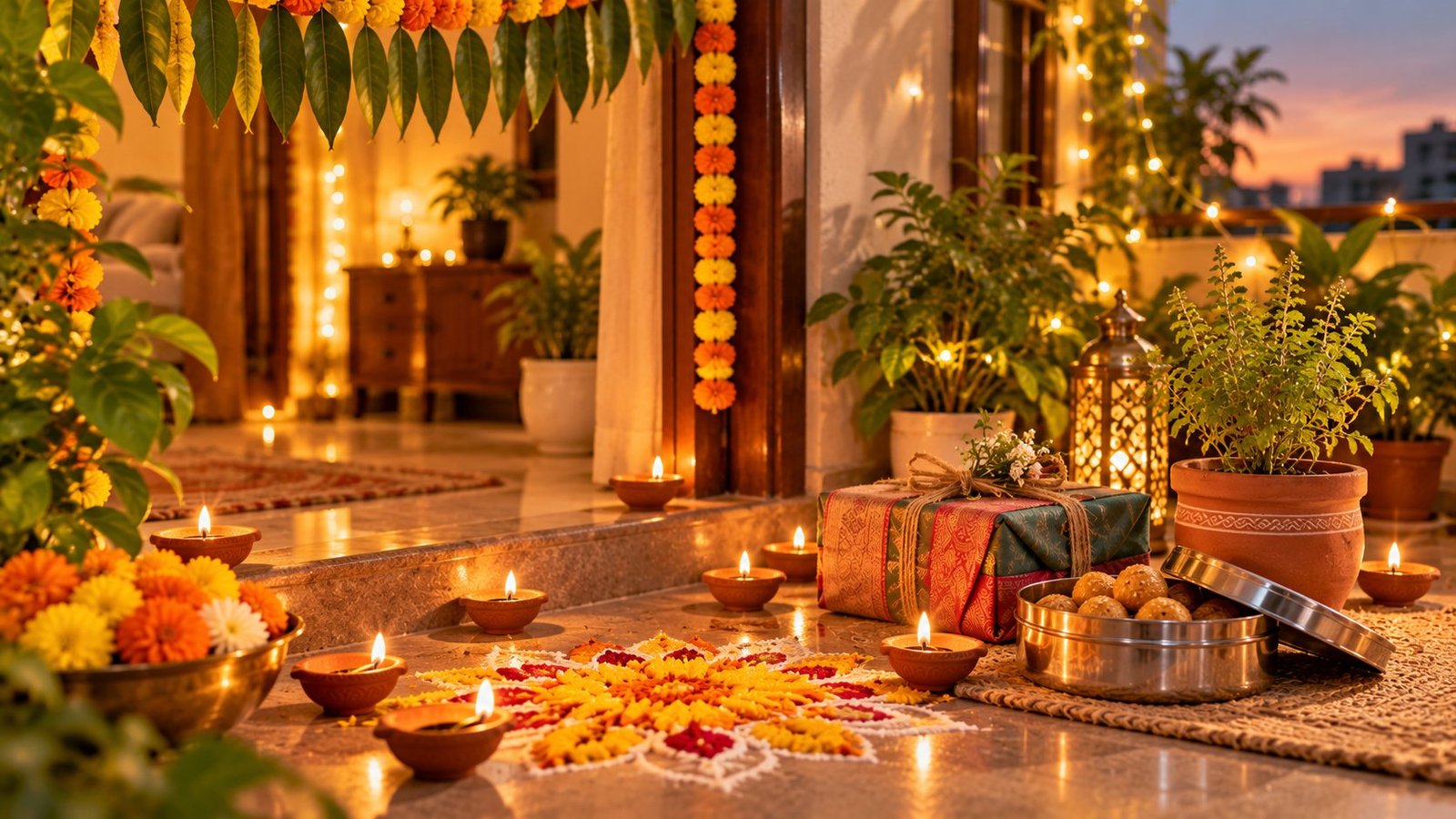
1. Use clay diyas, and keep them for next year
Plain terracotta diyas from a local potter cost little, and they can be used for many years. After Diwali, wipe off the oil while it is still soft, wash them in warm soapy water, dry them fully in the sun and store them wrapped in newspaper. Our guide to cleaning brass and silver puja items covers the metal diyas many families keep alongside.
2. Switch to LED string lights
LED lights use far less electricity than old filament bulbs. The US Department of Energy says residential LEDs use at least 75% less energy and last up to 25 times longer than incandescent lighting (US Department of Energy). A plug-in timer that switches the outdoor lights off at midnight cuts the bill further.
3. Fewer lights, better placed
Lights on the entrance, the balcony railing and around the puja corner look festive without covering every wall. Put the money and electricity where guests will see them.
Rangoli and decoration
4. Make rangoli with natural colours
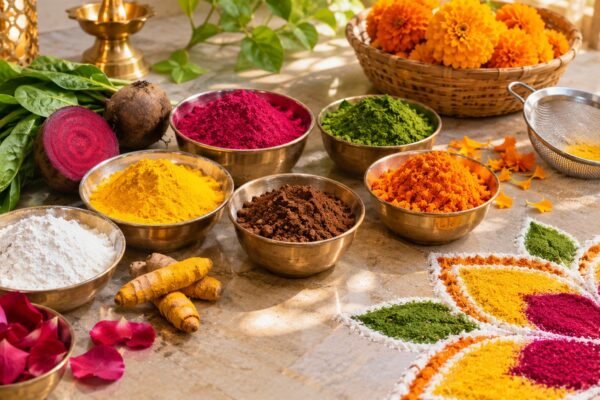
Rice flour, turmeric, dried flower petals and beetroot give a full range of colours without synthetic dyes. Our guide to making natural rangoli colours at home has a colour-by-ingredient table and the drying method.
5. Skip thermocol and plastic decorations
Thermocol (polystyrene) decorations, plastic flag pennants, plastic sticks for balloons, and plastic film wrap on sweet boxes and invitation cards are among the single-use plastic items banned in India since 1 July 2022 (SCC Online on the Plastic Waste Management Amendment Rules). Cloth torans, brass hangings, paper lanterns and fresh leaves can be used again or composted.
6. Buy decorations you will use again
A cloth or bead toran, a set of brass urlis and a few good lanterns can last a decade. Store them in one labelled box after Diwali so you do not end up buying the same things next year.
7. Compost the flowers
Marigold garlands and loose petals can go into a home compost bin or the wet-waste bin. If you have a lot, check whether your city has a flower-recycling group that turns temple and festival flowers into compost or incense. Avoid throwing puja flowers into lakes or rivers in plastic bags.
Gifts and shopping
8. Wrap gifts in cloth or paper you already have
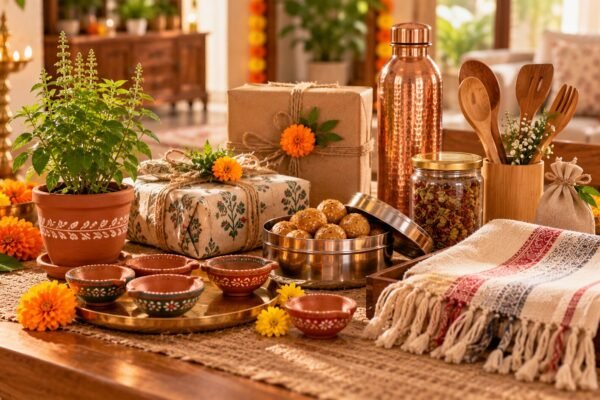
A dupatta, a cotton napkin or a square of old saree fabric tied around a box looks good and can be used again. Newspaper with a marigold tucked into the string works too. Keep the gift bags you receive and reuse them next year.
9. Choose gifts people will use
Plants, homemade sweets in steel dabbas, handloom textiles and bamboo kitchen tools are used long after the festival. Our list of natural Diwali gift ideas for family is sorted by budget, and our guide to bamboo products for Indian homes has more ideas.
10. Take your own bags and containers
For Dhanteras and Diwali shopping, carry cloth bags. Many sweet shops will pack mithai into your own steel container if you ask. If you are planning Dhanteras purchases, our list of what to buy on Dhanteras can help you buy less and better.
Crackers and air
11. Burst fewer crackers, or none
Crackers add to smoke, noise and litter at a time when many cities already have poor air. If your family does burst them, choose green crackers. These were developed by CSIR-NEERI and other CSIR labs to cut particulate emissions. A QR code on the box is not enough proof on its own, so buy from a licensed seller and check the product against NEERI’s approved list (WeNotice guide to this year’s firecracker rules). Follow the timings your state or district sets.
Many families now keep crackers to a short session for the children and spend the rest of the evening on diyas, food and visits.
12. Keep the air inside your home cleaner
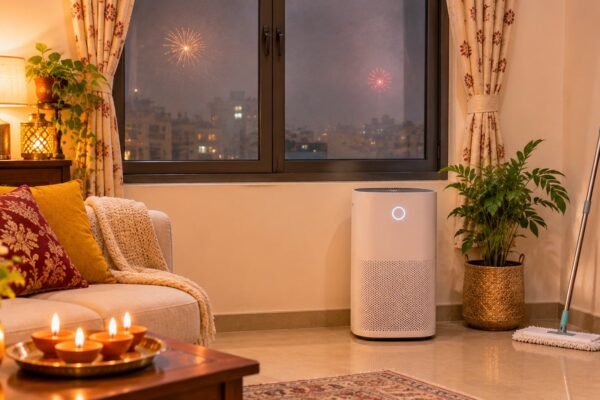
On the nights around Diwali, close the windows when crackers are being burst and air the house once the air quality improves. Our guide to keeping indoor air clean during Diwali explains when to open windows and what an air purifier can and cannot do.
Cleaning and food
13. Clean with simple, natural products
Baking soda, vinegar, lemon and soap handle most Diwali cleaning. Our guide to homemade natural cleaning products has recipes, and our Diwali cleaning checklist covers the order to clean in.
14. Declutter to donate, not to dump
Before cleaning, sort what you no longer use into donate, kabadiwala, e-waste and bin. Our list of things to throw away before Diwali explains where each kind of item should go.
15. Cook and buy sweets in sensible quantities
Plan the menu around how many people you will actually host, and share extra sweets with neighbours, house help and building staff on the day rather than letting them go stale. Compost vegetable and fruit peels from the festive cooking.
A quick eco-friendly Diwali checklist
| Area | Swap |
|---|---|
| Lighting | Clay or brass diyas; LED strings on a timer |
| Rangoli | Rice flour, turmeric, flowers, beetroot |
| Decoration | Cloth, brass, paper and leaves instead of thermocol and plastic |
| Flowers | Compost or give to flower recyclers |
| Gifts | Cloth or paper wrap; useful, natural gifts |
| Shopping | Cloth bags and your own sweet containers |
| Crackers | Fewer, green, from licensed sellers, within set timings |
| Cleaning | Baking soda, vinegar, lemon and soap |
For the full plan from three weeks out to Bhai Dooj, see our Diwali preparation checklist.
Frequently asked questions
What is an eco-friendly Diwali?
It means celebrating with less waste and pollution: reusable diyas and decorations, natural rangoli, plastic-free gifting, fewer crackers and composting the flowers.
Are green crackers completely safe?
No cracker is pollution-free. Green crackers are designed to cut particulate emissions compared with conventional ones. Buy them from licensed sellers and follow local timings.
How can I celebrate Diwali without plastic?
Use cloth or paper gift wrap, steel containers for sweets, leaf or steel plates instead of disposables, and decorations made of cloth, brass, paper or flowers.
What should I do with Diwali flowers after the festival?
Compost them at home or in the wet-waste bin, or give them to a local flower-recycling group if your city has one.
Sources
- US Department of Energy, LED lighting
- SCC Online, Plastic Waste Management Amendment Rules, 2021: single-use plastic items prohibited from July 2022
- WeNotice, Firecracker rules this Diwali: green crackers, timings and what is still undecided