Best Bath Storage Ideas for Small Bathrooms & Organized Homes
Disclaimer: This article may contain affiliate links. If you purchase through these links, I may earn a small commission as an Amazon Associate—at no additional cost to you.
Bathrooms feel cluttered quickly because they house dozens of small items—toiletries, towels, cleaning supplies, grooming tools—in typically the smallest room of the house. Without proper storage, counters overflow, floors collect bottles, and finding what you need becomes a daily frustration.
In Indian apartments and small homes where bathrooms average just 40-60 square feet, storage becomes even more critical. Poor bathroom organization doesn’t just look messy—it affects your morning routine efficiency, creates stress, and can lead to water damage when products are left on wet surfaces.
The good news: smart bath storage isn’t about having a larger bathroom. It’s about using vertical space, corners, and hidden areas strategically. With the right storage solutions, even the smallest bathroom can feel spacious, calm, and functional.
Best Bath Storage Ideas for Every Bathroom
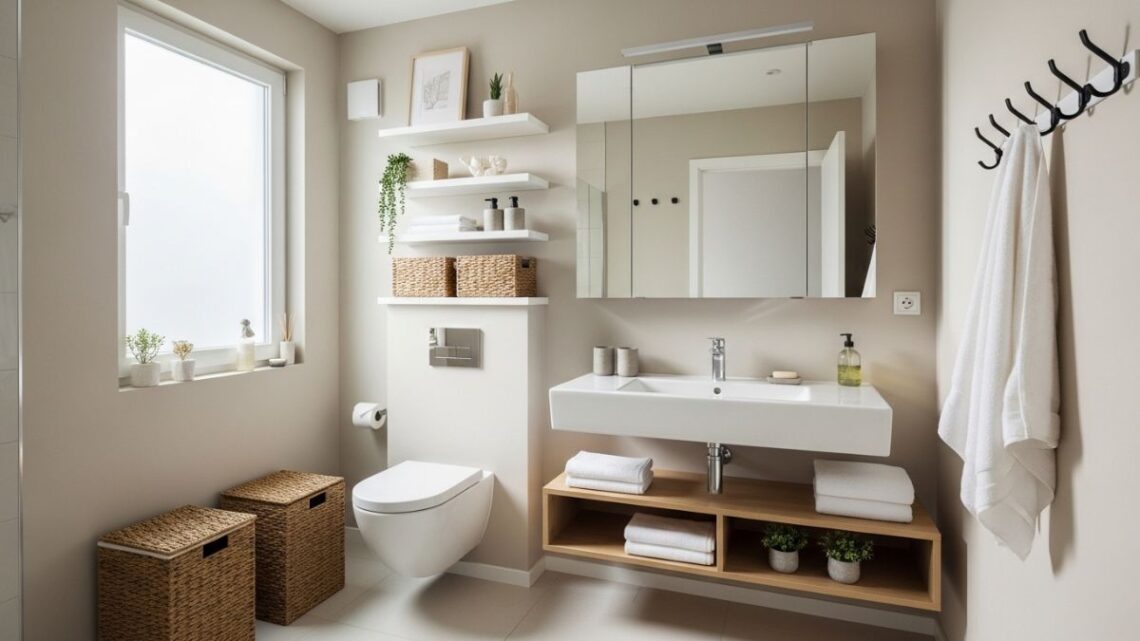
Wall-Mounted Shelves
Shelves attached directly to bathroom walls, floating without visible brackets or with minimal hardware. Available in various materials: stainless steel, glass, wood, or water-resistant MDF.
Why It Works:
Wall-mounted shelves utilize vertical space without consuming floor area. They keep frequently used items—face wash, moisturizers, toothbrush holders—at eye level and within arm’s reach. Unlike floor cabinets, they don’t make small bathrooms feel cramped.
Floating shelves create visual lightness while providing functional storage. A single 24-inch shelf can hold 8-10 daily-use products organized in small baskets or containers.
Who It’s Best For:
Renters (removable options available), small bathroom owners who can’t fit floor cabinets, and anyone wanting to display organized toiletries aesthetically.
Small-Space Tip: Install 2-3 narrow shelves vertically rather than one wide shelf. This tiered approach stores more items in less horizontal space.
Corner Shelves
Triangular or curved shelves designed specifically to fit bathroom corners—spaces typically wasted in most storage plans.
Why It Works:
Corners are dead zones in bathrooms. Corner shelves activate this unused 90-degree angle, creating storage without intruding into the main bathroom space. They’re perfect for shower corners (storing shampoo, soap, body wash) or wall corners near sinks.
Tiered corner shelves provide 3-4 levels of storage in a footprint smaller than a dinner plate. Rust-proof materials like stainless steel or treated plastic withstand constant moisture exposure.
Who It’s Best For:
Shower storage needs, bathrooms with awkward layouts, and homes maximizing every square inch of space.
Small-Space Tip: Choose corner shelves with drainage holes to prevent water pooling and mildew growth in shower installations.
Under-Sink Storage Organizers
Shelving units, sliding drawers, or stackable bins designed to organize the cabinet space beneath bathroom sinks—often cluttered with pipes and wasted vertical space.
Why It Works:
The under-sink area is prime real estate wasted in most bathrooms. Pipes create obstacles, but specialized organizers work around plumbing to create usable storage tiers.
Sliding drawer organizers, U-shaped shelves, and stackable bins transform chaotic under-sink areas into categorized storage for cleaning supplies, extra toiletries, toilet paper, and feminine hygiene products.
This hidden storage keeps counters clear while maintaining easy access to backstock items.
Who It’s Best For:
Bathrooms with pedestal sinks that lack built-in storage, families with multiple toiletry products, and anyone wanting to declutter visible surfaces.
Small-Space Tip: Choose clear or pull-out organizers so you can see and reach items at the back without removing everything in front.
Over-the-Toilet Storage Racks
Freestanding or wall-mounted shelving units that fit over and around standard toilets, utilizing the vertical space above the tank.
Why It Works:
The space above toilets is typically empty—a vertical column of wasted storage potential. Over-the-toilet racks capture this space with 2-4 shelves for storing towels, toilet paper, decorative items, and toiletry backstock.
These units add significant storage capacity (equivalent to a small cabinet) without consuming additional floor space. They’re especially valuable in bathrooms lacking linen closets or medicine cabinets.
Who It’s Best For:
Bathrooms with no built-in storage, renters who can’t install permanent fixtures, and small bathrooms where every vertical inch counts.
Small-Space Tip: Choose open-shelf designs over enclosed cabinets—they feel less bulky visually while providing equal storage functionality.
Storage Baskets & Bins
Woven, plastic, or fabric containers in various sizes used to categorize and contain bathroom items within shelves, cabinets, or on floors.
Why It Works:
Baskets prevent the “everything loose on shelves” chaos that makes bathrooms feel cluttered. They create visual order by containing similar items together: one basket for hair products, another for skincare, another for first-aid supplies.
Water-resistant woven baskets or plastic bins withstand bathroom humidity. Labeled baskets let family members find items independently without asking or searching.
Baskets also hide visual clutter—a closed basket of miscellaneous items looks neater than items scattered across a shelf.
Who It’s Best For:
Everyone. This is universal bath storage that works regardless of bathroom size or layout.
Small-Space Tip: Use slim rectangular baskets that maximize shelf depth rather than square baskets that waste corner space.
Mirror Cabinets
Medicine cabinets or full-length mirrors with hidden storage compartments behind the reflective surface.
Why It Works:
Mirror cabinets serve dual purposes—providing necessary mirrors while hiding storage. This 2-in-1 functionality is perfect for small bathrooms where every item must justify its space.
Medicine cabinets typically offer 2-4 shelves behind the mirror, ideal for daily-use items like toothpaste, medications, deodorant, and contact lens supplies. Larger mirror cabinets with side compartments store even more.
The hidden storage keeps counters completely clear while maintaining instant access to essentials.
Who It’s Best For:
Small bathrooms needing both mirrors and storage, minimalist aesthetics preferring hidden storage, and bathrooms with limited wall space for separate mirrors and shelves.
Small-Space Tip: Choose recessed mirror cabinets that sit inside the wall rather than protruding into the room—they save 3-4 inches of space.
Towel Racks & Hooks
Wall-mounted bars, rings, or hooks designed specifically for hanging towels, robes, and clothing.
Why It Works:
Towels consume significant space when folded and stored. Hanging them vertically on racks or hooks saves storage space while allowing towels to dry properly between uses (preventing mildew).
Multiple hooks at different heights accommodate family members. Over-the-door hooks require zero wall installation while providing 4-6 hanging points. Heated towel racks add the luxury of warm, dry towels while preventing moisture buildup.
Who It’s Best For:
Every bathroom needs towel storage. Hooks suit small spaces better than bars (use less horizontal wall space), while multiple bars suit larger families.
Small-Space Tip: Install hooks vertically in a column rather than horizontally in a row—this uses height instead of width.
Shower Caddies
Hanging, corner-mounted, or tension-rod storage units that organize shampoo, conditioner, soap, and bathing accessories within the shower itself.
Why It Works:
Shower products left on tub edges or floors create clutter and cause bottles to tip over. Shower caddies contain all bathing essentials in designated spots at easy reach.
Hanging caddies hook over showerheads, tension pole caddies fit floor-to-ceiling without drilling, and suction corner caddies stick to tiles. All keep products off wet surfaces where they collect soap scum and mildew.
Who It’s Best For:
Shower-only bathrooms, families sharing one shower (multiple product storage needed), and anyone frustrated by slipping soap bottles.
Small-Space Tip: Choose caddies with drainage holes and rust-proof coatings. Tension pole caddies maximize vertical space in small shower stalls.
Drawer Dividers
Adjustable or fixed compartments placed inside bathroom drawers to create organized sections for different item categories.
Why It Works:
Bathroom drawers become junk drawers quickly—makeup, cotton swabs, razors, nail clippers, hair ties all mixed together. Drawer dividers create designated spots for each category.
This organization means finding items in seconds instead of digging through cluttered drawers. Dividers also maximize drawer space by allowing vertical stacking of similar items in their designated compartments.
Who It’s Best For:
Bathrooms with built-in drawers, makeup and grooming product users, and anyone sharing bathroom drawers with family members.
Small-Space Tip: Use expandable dividers that adjust to drawer dimensions, eliminating wasted space along edges.
Slim Rolling Storage Carts
Narrow, wheeled carts (typically 4-6 inches wide) that fit into tight spaces beside toilets, washing machines, or sinks.
Why It Works:
The gap between the toilet and wall or between the sink and bathtub is usually 4-8 inches of dead space. Slim rolling carts are designed precisely for these gaps, adding 3-4 tiers of storage without requiring additional floor space.
They’re mobile—roll them out to access items, roll them back to hide storage. Perfect for extra toilet paper, cleaning supplies, or overflow toiletry storage.
Who It’s Best For:
Small bathrooms with narrow gaps, renters wanting non-permanent storage additions, and anyone needing hidden storage that remains accessible.
Small-Space Tip: Measure your gap precisely before buying. Most slim carts come in 4-inch, 5-inch, and 6-inch widths.
Common Bathroom Storage Mistakes to Avoid
Mistake #1: Overcrowding Shelves
Cramming every inch of shelf space makes bathrooms feel cluttered and stressful. Overpacked shelves are also harder to clean, and items fall when you remove one thing.
Solution: Follow the 70% rule—fill shelves only 70%, leaving breathing room. This creates visual calm and functional accessibility.
Mistake #2: Ignoring Moisture Issues
Storing items directly on shower floors, in damp cabinets without ventilation, or in areas with constant water exposure leads to rust, mildew, and product damage.
Solution: Choose rust-proof materials (stainless steel, treated plastic, bamboo). Use storage with drainage holes in shower areas. Run exhaust fans during and after showers.
Mistake #3: Poor Ventilation Around Storage
Closed cabinets in humid bathrooms become breeding grounds for mold and musty odors, damaging stored towels and products.
Solution: Leave cabinet doors slightly open after showers. Choose storage with slatted doors or open shelving. Install small dehumidifiers in enclosed storage areas if bathrooms lack windows.
Mistake #4: Buying Bulky Cabinets for Small Bathrooms
Large, deep cabinets make small bathrooms feel cramped and closed-in while wasting the back half of storage space (items pushed to the back become inaccessible and forgotten).
Solution: Choose slim, tall storage over wide, deep units. Opt for open shelving or glass-front cabinets that feel lighter visually. Use pull-out organizers in deeper cabinets.
Mistake #5: Not Categorizing Items
Throwing all toiletries together without grouping similar items means wasting time searching daily and buying duplicates because you can’t find what you already own.
Solution: Create clear categories: hair care, skincare, oral care, first aid, cleaning supplies. Use separate baskets or drawer dividers for each category.
Mistake #6: Storing Everything in the Bathroom
Not every bath-related item needs bathroom storage. Backup toilet paper, extra towels, bulk toiletries, and seasonal items can live in linen closets, bedroom closets, or kitchen storage.
Solution: Keep only active-use items (current bottles, daily towels) in the bathroom. Store backstock elsewhere to free up prime bathroom space.
Quick Bath Storage Checklist
Use this checklist to organize your bathroom systematically:
Step 1: Declutter First
- Remove expired medications and cosmetics
- Discard empty bottles and packaging
- Donate unused toiletries (unopened only)
- Clear counters completely before reorganizing
Step 2: Categorize Items
- Group by usage: daily, weekly, occasional
- Group by type: skincare, haircare, oral care, medications
- Group by user: personal items vs. shared items
Step 3: Maximize Vertical Space
- Install wall shelves up to 6 feet high
- Use over-toilet storage racks
- Add corner shelves in empty wall corners
- Stack storage bins vertically
Step 4: Utilize Hidden Areas
- Organize under-sink cabinets with tiered shelves
- Use inside cabinet doors for hooks or mounted organizers
- Fill narrow gaps with slim rolling carts
Step 5: Label Containers
- Label baskets, bins, and drawer sections clearly
- Use waterproof labels in moisture-prone areas
- Create visual labels (pictures) for kids or shared bathrooms
Step 6: Keep Daily-Use Items Accessible
- Store at eye level: toothbrush, toothpaste, face wash, moisturizer
- Store at arm’s reach in shower: current shampoo, conditioner, soap
- Keep towels on easily reached hooks or bars
Step 7: Maintain Weekly
- Wipe down shelves every week
- Return misplaced items to designated spots
- Dispose of empty containers immediately
- Refill running-low items before they run out
Bathroom storage transforms daily routines from frustrating searches into smooth, efficient experiences. The difference between a cluttered bathroom and an organized one isn’t square footage—it’s strategic use of vertical space, corners, and hidden areas.
Start with one storage solution this week: add a shelf, install hooks, or organize under your sink with bins. Each small improvement compounds, creating a bathroom that feels larger, calmer, and more functional.
Good bathroom storage isn’t about buying expensive systems. It’s about understanding your space, identifying what you actually use daily, and creating designated homes for every item. When everything has a place, your bathroom maintains itself with minimal effort.
The most organized bathrooms are simply ones where storage matches actual usage—not aspirational storage for items you don’t own, but practical solutions for the products and towels you use every single day.
Frequently Asked Questions
Use vertical space with wall-mounted shelves and over-toilet racks. Install hooks behind doors for towels and robes. Maximize corner areas with triangular shelves. Add under-sink organizers and slim rolling carts in narrow gaps. Choose multi-functional furniture like mirror cabinets that provide storage and mirrors simultaneously.
Wall-mounted shelves and over-the-door hooks are the best solutions for tiny bathrooms because they add storage without consuming floor space. Combine these with corner shelves, shower caddies, and under-sink organizers to maximize every available inch vertically and in unused angles.
Use open shelving, wall-mounted baskets, and storage carts instead of cabinets. Install floating shelves at multiple heights. Add over-toilet storage racks. Use decorative baskets on shelves to contain items while maintaining an organized appearance. Hang towels and robes on multiple hooks or towel bars.
Yes, open shelves work well in bathrooms when items are organized in baskets or containers. They make small bathrooms feel more spacious than closed cabinets and provide easy access to daily-use items. However, items on open shelves collect dust and moisture faster, requiring more frequent cleaning than enclosed storage.